
Study protocol of a prospective multicenter study comparing (cost-)effectiveness of a tailored interdisciplinary head and neck rehabilitation progr…
Authors of this article are:
Beck ACC, Passchier E, Retèl VP, Stuiver MM, van der Molen L, Klop WMC, Navran A, van Harten WH, van den Brekel MWM.
A summary of the article is shown below:
BACKGROUND: Since 2011, a tailored, interdisciplinary head and neck rehabilitation (IHNR) program, covered by the basic healthcare insurance, is offered to advanced head and neck cancer (HNC) patients in the Netherlands Cancer Institute (NKI). This program is developed to preserve or restore patients’ functioning, and to optimize health-related quality of life (HRQoL). It applies an integrated approach to define patients’ individual goals and provide rehabilitation care throughout the cancer care continuum. The aim of the current study is to assess the (cost-) effectiveness of the IHNR approach compared to usual supportive care (USC) consisting of monodisciplinary and multidisciplinary care in advanced HNC patients.METHODS: This multicenter prospective observational study is designed to compare (cost-)effectiveness of the IHNR to USC for advanced HNC patients treated with chemoradiotherapy (CRT) or bioradiotherapy (BRT). The primary outcome is HRQoL represented in the EORTC QLQ-C30 summary score. Functional HRQoL, societal participation, utility values, return to work (RTW), unmet needs (UN), patient satisfaction and clinical outcomes are secondary outcomes, assessed using the EORTC QLQ-H&N35, USER-P, EQ-5D-5 L, and study-specific questionnaires, respectively. Both patient groups (required sample size: 64 per arm) are requested to complete the questionnaires at: diagnosis (baseline; T0), 3 months (T1), 6 months (T2), 9 months (T3) and 12 months (T4) after start of medical treatment. Differences in outcomes between the intervention and control group will be analyzed using mixed effects models, Chi-square test and descriptive statistics. In addition, a cost-effectiveness analysis (CEA) will be performed by means of a Markov decision model. The CEA will be performed using a societal perspective of the Netherlands.DISCUSSION: This prospective multicenter study will provide evidence on the effectiveness and cost-effectiveness of IHNR compared to USC. RTW and societal participation, included as secondary outcomes, have not been studied sufficiently yet in cancer rehabilitation. Interdisciplinary rehabilitation has not yet been implemented as usual care in all centers, which offers the opportunity to perform a controlled clinical study. If demonstrated to be (cost-)effective, national provision of the program can probably be advised.TRIAL REGISTRATION: The study has been retrospectively registered in the Netherlands Trial Registry on April 24th 2018 ( NTR7140 ).
Check out the article’s website on Pubmed for more information:
[link-preview url=https://www.ncbi.nlm.nih.gov/pubmed/31269918 forceshot=true]
This article is a good source of information and a good way to become familiar with topics such as: (cost-) effectiveness;Head and neck cancer;Interdisciplinary care;Multidisciplinary care;Quality of life;Rehabilitation;Return to work;Societal participation.
New Chemicals from MOLECULAR DEPOT
-
- Sale!
- Chemicals, Interference, Lipids
Triglyceride Mix for Interference Testing
- Original price was: $895.00.$395.00Current price is: $395.00.
-
- Sale!
- Chemicals
Microparticle Stabilizer Solution
- Price range: $295.00 through $495.00
-
- Sale!
- Buffers & Solutions, Chemicals
Enzyme Acceptor Stabilization Buffer
- Original price was: $495.00.$250.00Current price is: $250.00.
-
- Sale!
- Buffers & Solutions, Chemicals
Enzyme Donor Stabilization Buffer
- Original price was: $495.00.$250.00Current price is: $250.00.
-
- Sale!
- Chemicals, Conjugates
Progesterone Biotin Conjugate Solution
- Original price was: $995.00.$595.00Current price is: $595.00.
-
- Sale!
- Buffers & Solutions, Chemicals
Microparticle Activation Buffer
- Price range: $395.00 through $695.00
-
- Sale!
- Buffers & Solutions, Chemicals
Microparticle Washing Buffer
- Price range: $395.00 through $695.00
-
- Sale!
- Buffers & Solutions, Chemicals
Microparticle Blocking Buffer
- Price range: $395.00 through $695.00
-
- Sale!
- Buffers & Solutions, Chemicals
Latex Microparticles Anti Aggregation Agent
- Price range: $295.00 through $3,500.00
-
- Sale!
- Chemicals
CPRG (Chlorophenol red-β-D-galactopyranoside)
- Original price was: $850.00.$395.00Current price is: $395.00.






New Proteins from MOLECULAR DEPOT
-
- Sale!
- Conjugates, Proteins
Captopril HSA Biotin Conjugate
- Original price was: $1,995.00.$995.00Current price is: $995.00.
-
- Sale!
- Proteins
PKC-α, Active, GST-tagged from Xanopus sp.
- Original price was: $1,595.00.$795.00Current price is: $795.00.
-
- Sale!
- Conjugates, Proteins
Prilocain BSA Biotin Conjugate
- Original price was: $1,995.00.$995.00Current price is: $995.00.
-
- Sale!
- Conjugates, Proteins
T3 (Triiodothyronine) BSA Biotin Conjugate
- Original price was: $1,995.00.$995.00Current price is: $995.00.
-
- Sale!
- Conjugates, Proteins
Pipemidic Acid BSA Biotin Conjugate
- Original price was: $1,995.00.$995.00Current price is: $995.00.
-
- Sale!
- Proteins
PKD2 Protein, Active (Recombinant Human)
- Original price was: $1,795.00.$895.00Current price is: $895.00.
-
- Sale!
- Conjugates, Proteins
Meropenem BSA Biotin Conjugate
- Original price was: $1,995.00.$995.00Current price is: $995.00.
-
- Sale!
- Conjugates, Proteins
Piperacillin BSA Biotin Conjugate
- Original price was: $1,995.00.$995.00Current price is: $995.00.
-
- Sale!
- Proteins
Protein A Peroxidase from Staphylococcus aureus/horseradish
- Original price was: $1,195.00.$595.00Current price is: $595.00.
-
- Sale!
- Conjugates, Proteins
Tobramycin BSA Biotin Conjugate
- Original price was: $1,995.00.$995.00Current price is: $995.00.

New Antibodies from MOLECULAR DEPOT
-
- Sale!
- Antibodies
SUMO1 Antibody (C-Term)
- Original price was: $1,295.00.$695.00Current price is: $695.00.
-
- Sale!
- Antibodies
IL18RAP Antibody (N-Term)
- Original price was: $1,295.00.$695.00Current price is: $695.00.
-
- Sale!
- Antibodies
DENR Antibody
- Original price was: $1,295.00.$695.00Current price is: $695.00.
-
- Sale!
- Antibodies
Mouse DHFR Antibody (C-Term)
- Original price was: $1,295.00.$695.00Current price is: $695.00.
-
- Sale!
- Antibodies
BCL6B Antibody (Center)
- Original price was: $1,295.00.$695.00Current price is: $695.00.
-
- Sale!
- Antibodies
RSK4 Antibody (N-Term)
- Original price was: $1,295.00.$695.00Current price is: $695.00.
-
- Sale!
- Antibodies
IRF3 Antibody
- Original price was: $1,295.00.$695.00Current price is: $695.00.
-
- Sale!
- Antibodies
DAAM1-T361 Antibody (N-Term)
- Original price was: $1,295.00.$695.00Current price is: $695.00.
-
- Sale!
- Antibodies
RHEX Antibody (C-Term)
- Original price was: $1,295.00.$695.00Current price is: $695.00.
-
- Sale!
- Antibodies
Myoglobin Antibody
- Original price was: $1,295.00.$695.00Current price is: $695.00.
New Research Kits from MOLECULAR DEPOT
-
- Sale!
- Interference, Research Kits
Interference Test Kit
- Original price was: $995.00.$495.00Current price is: $495.00.
-
- Sale!
- Research Kits
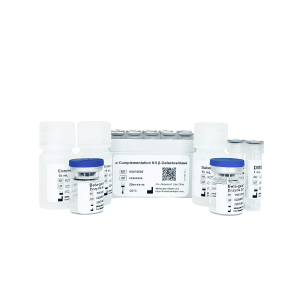
Alpha Complementation Kit Beta-galactosidase
- Original price was: $1,795.00.$895.00Current price is: $895.00.
-
- Sale!
- Research Kits
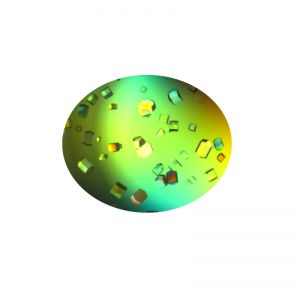
Crystallization Screen for Protein-DNA Complexes
- Original price was: $1,995.00.$995.00Current price is: $995.00.
-
- Sale!
- Molecular Biology, Research Kits
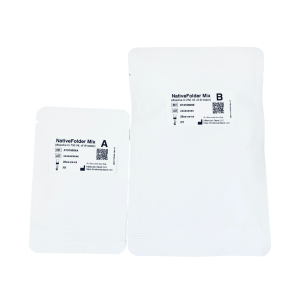
NativeFolder Bacterial Culture Medium
- Original price was: $795.00.$295.00Current price is: $295.00.
-
- Sale!
- Research Kits
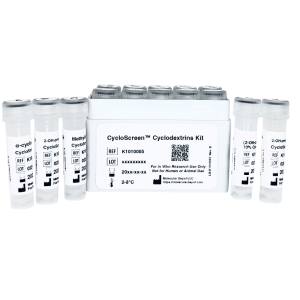
CycloScreen Cyclodextrins Kit
- Original price was: $695.00.$350.00Current price is: $350.00.
-
- Sale!
- Research Kits
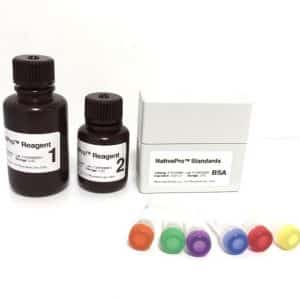
NativePro Bradford Protein Assay Kit (Automated)
- Original price was: $995.00.$495.00Current price is: $495.00.
-
- Sale!
- Interference, Research Kits
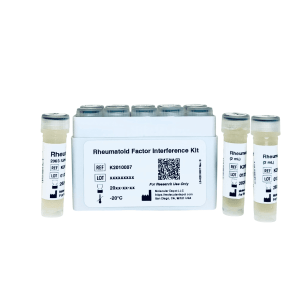
Rheumatoid Factor Interference Kit
- Original price was: $1,495.00.$695.00Current price is: $695.00.
-
- Sale!
- Interference, Research Kits
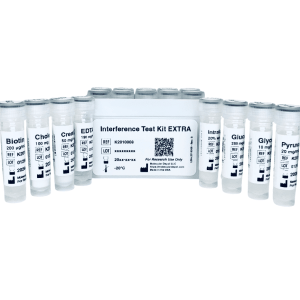
Interference Test Kit EXTRA
- Original price was: $1,295.00.$695.00Current price is: $695.00.
-
- Sale!
- Interference, Research Kits
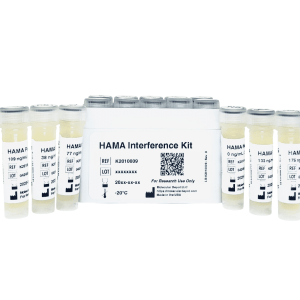
HAMA Interference Kit
- Original price was: $1,295.00.$695.00Current price is: $695.00.
-
- Sale!
- Buffers & Solutions, ELISA, Research Kits
ELISA Microplate Production Kit
- Original price was: $795.00.$495.00Current price is: $495.00.