
[Epidemiological analysis on 1 052 cases of COVID-19 in epidemic clusters].
Authors of this article are:
Gan H, Zhang Y, Yuan M, Wu XY, Liu ZR, Liu M, Wu JB, Xu SJ, Gong L, Xu HL, Tao FB.
A summary of the article is shown below:
in English, Chinese目的: 了解新型冠状病毒肺炎聚集性病例的流行病学特征,探讨家庭因素以及集体活动等对本病传播的影响。 方法: 于2020年1月19日至2月25日每日从中国6个省份公布聚集性病例的36个地市官方平台收集积聚性病例数量、个案信息,采用描述性统计方法、 χ(2)检验以及曲线拟合对聚集性病例的流行病学特征进行分析。 结果: 共收集聚集性病例366起1 052例,家庭聚集性病例占86.9%(914/1 052); 1 046例有性别信息的聚集性病例中,男性513例(49.0%),女性533例(51.0%); 病例以18~59岁青壮年为主,占68.5%(711/1 038)。在366起聚集性疫情中,有47.0%(172/366)聚集性疫情的首例确诊病例曾有武汉市或湖北省旅居史。1月19日至2月3日,首例确诊病例有武汉市或湖北省旅居史占66.5%; 2月4-25日聚集性病例首例确诊病例有武汉市或湖北省旅居史仅占18.2%。一代病例与二代病例发病时间间隔M为5(2~8)d,首发病例的发病—确诊时间间隔M为6(3~9)d,续发病例的发病—确诊时间间隔M为5(3~8) d。 结论: 聚集性疫情在武汉市和湖北省以外多地市普遍出现,家庭密切接触是造成家庭内传播的主要原因之一。2月4日后聚集性病例以当地一代或二代以后的病例传播为主,确诊时间缩短。.Objective: To understand the epidemiological characteristics of the cases of COVID-19 epidemic clusters, and explore the influence of family factors and social factors such as group activities on the spread of the disease. Methods: The data of cases of COVID-19 epidemic clusters from 19 January, 2020 to 25 February, 2020 were collected from the official platforms of 36 cities in 6 provinces in China. Descriptive statistical methods, χ(2) test and curve fitting were used to analyze the epidemiological characteristics of the clustered cases. Results: By 25 February, 2020, the data of 1 052 cases in 366 epidemic clusters were collected. In these clustered cases, 86.9%(914/1 050) occurred in families. Among the 1 046 cases with gender information, 513 were males (49.0%) and 533 were females (51.0%). The cases were mainly young adults between 18 and 59 years old, accounting for 68.5% (711/1 038). In the 366 epidemic clusters , the clusters in which the first confirmed cases with the history of sojourn in Wuhan or Hubei accounted for 47.0%(172/366). From 19 January to 3 February, 2020, the first confirmed cases with Wuhan or Hubei sojourn history accounted for 66.5%. From 4 to 25 February, the first confirmed cases who had Wuhan or Hubei sojourn history accounted for only 18.2%. The median of interval between the first generation case onset and the second generation case onset was 5 (2-8) days. The median of onset- diagnosis interval of the initial cases was 6 (3-9) days, and the median of onset-diagnosis interval of the secondary cases was 5 (3-8) days. Conclusions: Epidemic clusters of COVID-19 were common in many cities outside Wuhan and Hubei. Close contact in family was one of the main causes for the spread of household transmission of the virus. After 4 February, the epidemic clusters were mainly caused by the first generation or second generation cases in local areas, and the time for diagnosis became shorter.
Check out the article’s website on Pubmed for more information:
[link-preview url=https://www.ncbi.nlm.nih.gov/pubmed/32213270 forceshot=true]
This article is a good source of information and a good way to become familiar with topics such as: COVID-19; Clustering; Epidemiology.
New Research Kits from MOLECULAR DEPOT
-
- Sale!
- Interference, Research Kits
Interference Test Kit
- Original price was: $995.00.$495.00Current price is: $495.00.
-
- Sale!
- Research Kits
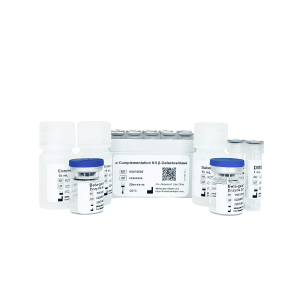
Alpha Complementation Kit Beta-galactosidase
- Original price was: $1,795.00.$895.00Current price is: $895.00.
-
- Sale!
- Research Kits
Crystallization Screen for Protein-DNA Complexes
- Original price was: $1,995.00.$995.00Current price is: $995.00.
-
- Sale!
- Molecular Biology, Research Kits
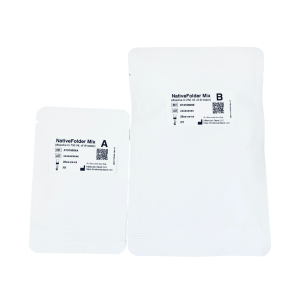
NativeFolder Bacterial Culture Medium
- Original price was: $795.00.$295.00Current price is: $295.00.
-
- Sale!
- Research Kits
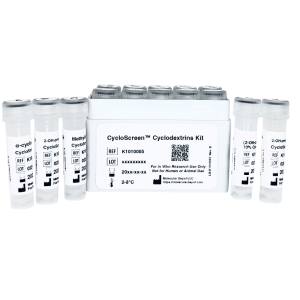
CycloScreen Cyclodextrins Kit
- Original price was: $695.00.$350.00Current price is: $350.00.
-
- Sale!
- Research Kits
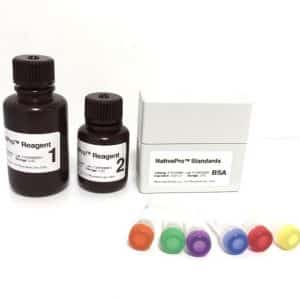
NativePro Bradford Protein Assay Kit (Automated)
- Original price was: $995.00.$495.00Current price is: $495.00.
-
- Sale!
- Interference, Research Kits
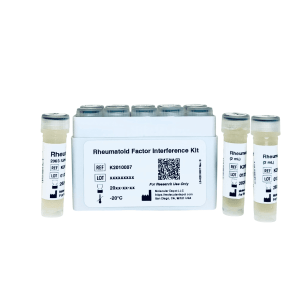
Rheumatoid Factor Interference Kit
- Original price was: $1,495.00.$695.00Current price is: $695.00.
-
- Sale!
- Interference, Research Kits
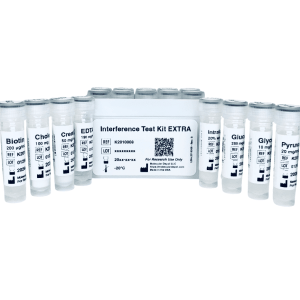
Interference Test Kit EXTRA
- Original price was: $1,295.00.$695.00Current price is: $695.00.
-
- Sale!
- Interference, Research Kits
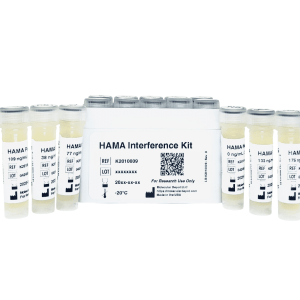
HAMA Interference Kit
- Original price was: $1,295.00.$695.00Current price is: $695.00.
-
- Sale!
- Buffers & Solutions, ELISA, Research Kits
ELISA Microplate Production Kit
- Original price was: $795.00.$495.00Current price is: $495.00.






New Antibodies from MOLECULAR DEPOT
-
- Sale!
- Antibodies
SUMO1 Antibody (C-Term)
- Original price was: $1,295.00.$695.00Current price is: $695.00.
-
- Sale!
- Antibodies
IL18RAP Antibody (N-Term)
- Original price was: $1,295.00.$695.00Current price is: $695.00.
-
- Sale!
- Antibodies
DENR Antibody
- Original price was: $1,295.00.$695.00Current price is: $695.00.
-
- Sale!
- Antibodies
Mouse DHFR Antibody (C-Term)
- Original price was: $1,295.00.$695.00Current price is: $695.00.
-
- Sale!
- Antibodies
BCL6B Antibody (Center)
- Original price was: $1,295.00.$695.00Current price is: $695.00.
-
- Sale!
- Antibodies
RSK4 Antibody (N-Term)
- Original price was: $1,295.00.$695.00Current price is: $695.00.
-
- Sale!
- Antibodies
IRF3 Antibody
- Original price was: $1,295.00.$695.00Current price is: $695.00.
-
- Sale!
- Antibodies
DAAM1-T361 Antibody (N-Term)
- Original price was: $1,295.00.$695.00Current price is: $695.00.
-
- Sale!
- Antibodies
RHEX Antibody (C-Term)
- Original price was: $1,295.00.$695.00Current price is: $695.00.
-
- Sale!
- Antibodies
Myoglobin Antibody
- Original price was: $1,295.00.$695.00Current price is: $695.00.
New Proteins from MOLECULAR DEPOT
-
- Sale!
- Conjugates, Proteins
Captopril HSA Biotin Conjugate
- Original price was: $1,995.00.$995.00Current price is: $995.00.
-
- Sale!
- Proteins
PKC-α, Active, GST-tagged from Xanopus sp.
- Original price was: $1,595.00.$795.00Current price is: $795.00.
-
- Sale!
- Conjugates, Proteins
Prilocain BSA Biotin Conjugate
- Original price was: $1,995.00.$995.00Current price is: $995.00.
-
- Sale!
- Conjugates, Proteins
T3 (Triiodothyronine) BSA Biotin Conjugate
- Original price was: $1,995.00.$995.00Current price is: $995.00.
-
- Sale!
- Conjugates, Proteins
Pipemidic Acid BSA Biotin Conjugate
- Original price was: $1,995.00.$995.00Current price is: $995.00.
-
- Sale!
- Proteins
PKD2 Protein, Active (Recombinant Human)
- Original price was: $1,795.00.$895.00Current price is: $895.00.
-
- Sale!
- Conjugates, Proteins
Meropenem BSA Biotin Conjugate
- Original price was: $1,995.00.$995.00Current price is: $995.00.
-
- Sale!
- Conjugates, Proteins
Piperacillin BSA Biotin Conjugate
- Original price was: $1,995.00.$995.00Current price is: $995.00.
-
- Sale!
- Proteins
Protein A Peroxidase from Staphylococcus aureus/horseradish
- Original price was: $1,195.00.$595.00Current price is: $595.00.
-
- Sale!
- Conjugates, Proteins
Tobramycin BSA Biotin Conjugate
- Original price was: $1,995.00.$995.00Current price is: $995.00.

New Chemicals from MOLECULAR DEPOT
-
- Sale!
- Chemicals, Interference, Lipids
Triglyceride Mix for Interference Testing
- Original price was: $895.00.$395.00Current price is: $395.00.
-
- Sale!
- Chemicals
Microparticle Stabilizer Solution
- Price range: $295.00 through $495.00
-
- Sale!
- Buffers & Solutions, Chemicals
Enzyme Acceptor Stabilization Buffer
- Original price was: $495.00.$250.00Current price is: $250.00.
-
- Sale!
- Buffers & Solutions, Chemicals
Enzyme Donor Stabilization Buffer
- Original price was: $495.00.$250.00Current price is: $250.00.
-
- Sale!
- Chemicals, Conjugates
Progesterone Biotin Conjugate Solution
- Original price was: $995.00.$595.00Current price is: $595.00.
-
- Sale!
- Buffers & Solutions, Chemicals
Microparticle Activation Buffer
- Price range: $395.00 through $695.00
-
- Sale!
- Buffers & Solutions, Chemicals
Microparticle Washing Buffer
- Price range: $395.00 through $695.00
-
- Sale!
- Buffers & Solutions, Chemicals
Microparticle Blocking Buffer
- Price range: $395.00 through $695.00
-
- Sale!
- Buffers & Solutions, Chemicals
Latex Microparticles Anti Aggregation Agent
- Price range: $295.00 through $3,500.00
-
- Sale!
- Chemicals
CPRG (Chlorophenol red-β-D-galactopyranoside)
- Original price was: $850.00.$395.00Current price is: $395.00.