
Risk factor analysis of postoperative acute respiratory distress syndrome after type A aortic dissection repair surgery.
Authors of this article are:
Su IL, Wu VC, Chou AH, Yang CH, Chu PH, Liu KS, Tsai FC, Lin PJ, Chang CH, Chen SW.
A summary of the article is shown below:
To investigate the incidence, outcomes, and risk factors of postoperative acute respiratory distress syndrome (ARDS) in patients undergoing surgical repair for acute type A aortic dissection.This retrospective study involved 270 patients who underwent surgical repair for acute type A aortic dissection between January 2009 and December 2015. Data on clinical characteristics and outcomes were collected. Patients who immediately died after surgery and with preoperative myocardial dysfunction were excluded. The included patients were divided into the ARDS (ARDS patients who met the Berlin definition) and non-ARDS groups. Primary outcome was postoperative ARDS, according to the 2012 Berlin definition for ARDS and was reviewed by 2 qualified physicians with expertise in critical care and cardiac surgery. Outcomes of interest were the incidence and severity of risk factors for ARDS in this population, and perioperative outcomes and survival rates were compared with patients with or without ARDS.A total of 233 adult patients were enrolled into this study; of these, 37 patients (15.9%) had ARDS. Three, 20, and 14 patients had mild, moderate, and severe ARDS, respectively, according to the Berlin definition, with no significant difference in age, sex, and underlying disease. The ARDS group had lower mean oxygenation index (OI) than the non-ARDS group in the first 3 days post-surgery and demonstrated an improvement in lung function after the fourth day. Postoperative complication risks were higher in the ARDS group than in the non-ARDS group. However, no significant difference was observed in in-hospital mortality between the 2 groups (10.8% vs 5.6%, P = .268). Additionally, there was also no significant difference in the 3-year mortality rate between the 2 groups (P of log-rank test = .274). Postoperative hemoglobin level (odds ratio [OR]: 0.78; 95% confidence interval [CI]: 0.62-0.99) and perioperative blood transfusion volume (OR: 1.07; 95% CI: 1.03-1.12) were associated with ARDS risk.Postoperative ARDS after type A aortic dissection repair surgery was associated with risks of postoperative complications but not with risk of in-hospital mortality or 3-year mortality. A higher perioperative blood transfusion volume and a lower postoperative hemoglobin level may be risk factors for ARDS.
Check out the article’s website on Pubmed for more information:
[link-preview url=https://www.ncbi.nlm.nih.gov/pubmed/31335676 forceshot=true]
This article is a good source of information and a good way to become familiar with topics such as: Adult;Aged;Aneurysm, Dissecting;Aortic Aneurysm;Blood Gas Analysis;Critical Care;Factor Analysis, Statistical;Female;Hemoglobins;Hospital Mortality;Humans;Incidence;Male;Middle Aged;Respiratory Distress Syndrome, Adult;Respiratory Function Tests;Risk Assessment;Risk Factors;Survival Rate;Vascular Surgical Procedures.
New Chemicals from MOLECULAR DEPOT
-
- Sale!
- Chemicals, Interference, Lipids
Triglyceride Mix for Interference Testing
- Original price was: $895.00.$395.00Current price is: $395.00.
-
- Sale!
- Chemicals
Microparticle Stabilizer Solution
- Price range: $295.00 through $495.00
-
- Sale!
- Buffers & Solutions, Chemicals
Enzyme Acceptor Stabilization Buffer
- Original price was: $495.00.$250.00Current price is: $250.00.
-
- Sale!
- Buffers & Solutions, Chemicals
Enzyme Donor Stabilization Buffer
- Original price was: $495.00.$250.00Current price is: $250.00.
-
- Sale!
- Chemicals, Conjugates
Progesterone Biotin Conjugate Solution
- Original price was: $995.00.$595.00Current price is: $595.00.
-
- Sale!
- Buffers & Solutions, Chemicals
Microparticle Activation Buffer
- Price range: $395.00 through $695.00
-
- Sale!
- Buffers & Solutions, Chemicals
Microparticle Washing Buffer
- Price range: $395.00 through $695.00
-
- Sale!
- Buffers & Solutions, Chemicals
Microparticle Blocking Buffer
- Price range: $395.00 through $695.00
-
- Sale!
- Buffers & Solutions, Chemicals
Latex Microparticles Anti Aggregation Agent
- Price range: $295.00 through $3,500.00
-
- Sale!
- Chemicals
CPRG (Chlorophenol red-β-D-galactopyranoside)
- Original price was: $850.00.$395.00Current price is: $395.00.






New Proteins from MOLECULAR DEPOT
-
- Sale!
- Conjugates, Proteins
Captopril HSA Biotin Conjugate
- Original price was: $1,995.00.$995.00Current price is: $995.00.
-
- Sale!
- Proteins
PKC-α, Active, GST-tagged from Xanopus sp.
- Original price was: $1,595.00.$795.00Current price is: $795.00.
-
- Sale!
- Conjugates, Proteins
Prilocain BSA Biotin Conjugate
- Original price was: $1,995.00.$995.00Current price is: $995.00.
-
- Sale!
- Conjugates, Proteins
T3 (Triiodothyronine) BSA Biotin Conjugate
- Original price was: $1,995.00.$995.00Current price is: $995.00.
-
- Sale!
- Conjugates, Proteins
Pipemidic Acid BSA Biotin Conjugate
- Original price was: $1,995.00.$995.00Current price is: $995.00.
-
- Sale!
- Proteins
PKD2 Protein, Active (Recombinant Human)
- Original price was: $1,795.00.$895.00Current price is: $895.00.
-
- Sale!
- Conjugates, Proteins
Meropenem BSA Biotin Conjugate
- Original price was: $1,995.00.$995.00Current price is: $995.00.
-
- Sale!
- Conjugates, Proteins
Piperacillin BSA Biotin Conjugate
- Original price was: $1,995.00.$995.00Current price is: $995.00.
-
- Sale!
- Proteins
Protein A Peroxidase from Staphylococcus aureus/horseradish
- Original price was: $1,195.00.$595.00Current price is: $595.00.
-
- Sale!
- Conjugates, Proteins
Tobramycin BSA Biotin Conjugate
- Original price was: $1,995.00.$995.00Current price is: $995.00.

New Antibodies from MOLECULAR DEPOT
-
- Sale!
- Antibodies
SUMO1 Antibody (C-Term)
- Original price was: $1,295.00.$695.00Current price is: $695.00.
-
- Sale!
- Antibodies
IL18RAP Antibody (N-Term)
- Original price was: $1,295.00.$695.00Current price is: $695.00.
-
- Sale!
- Antibodies
DENR Antibody
- Original price was: $1,295.00.$695.00Current price is: $695.00.
-
- Sale!
- Antibodies
Mouse DHFR Antibody (C-Term)
- Original price was: $1,295.00.$695.00Current price is: $695.00.
-
- Sale!
- Antibodies
BCL6B Antibody (Center)
- Original price was: $1,295.00.$695.00Current price is: $695.00.
-
- Sale!
- Antibodies
RSK4 Antibody (N-Term)
- Original price was: $1,295.00.$695.00Current price is: $695.00.
-
- Sale!
- Antibodies
IRF3 Antibody
- Original price was: $1,295.00.$695.00Current price is: $695.00.
-
- Sale!
- Antibodies
DAAM1-T361 Antibody (N-Term)
- Original price was: $1,295.00.$695.00Current price is: $695.00.
-
- Sale!
- Antibodies
RHEX Antibody (C-Term)
- Original price was: $1,295.00.$695.00Current price is: $695.00.
-
- Sale!
- Antibodies
Myoglobin Antibody
- Original price was: $1,295.00.$695.00Current price is: $695.00.
New Research Kits from MOLECULAR DEPOT
-
- Sale!
- Interference, Research Kits
Interference Test Kit
- Original price was: $995.00.$495.00Current price is: $495.00.
-
- Sale!
- Research Kits
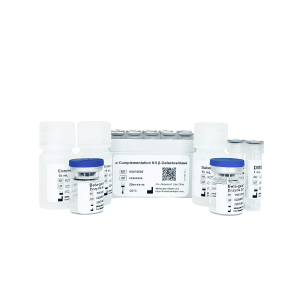
Alpha Complementation Kit Beta-galactosidase
- Original price was: $1,795.00.$895.00Current price is: $895.00.
-
- Sale!
- Research Kits
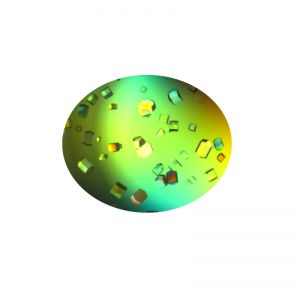
Crystallization Screen for Protein-DNA Complexes
- Original price was: $1,995.00.$995.00Current price is: $995.00.
-
- Sale!
- Molecular Biology, Research Kits
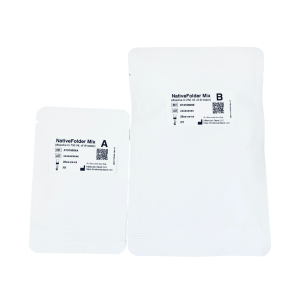
NativeFolder Bacterial Culture Medium
- Original price was: $795.00.$295.00Current price is: $295.00.
-
- Sale!
- Research Kits
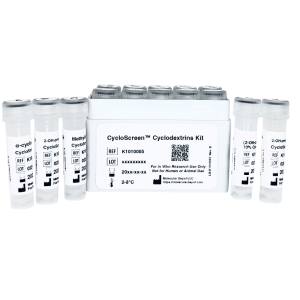
CycloScreen Cyclodextrins Kit
- Original price was: $695.00.$350.00Current price is: $350.00.
-
- Sale!
- Research Kits
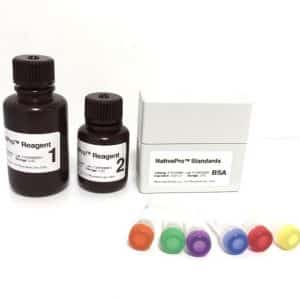
NativePro Bradford Protein Assay Kit (Automated)
- Original price was: $995.00.$495.00Current price is: $495.00.
-
- Sale!
- Interference, Research Kits
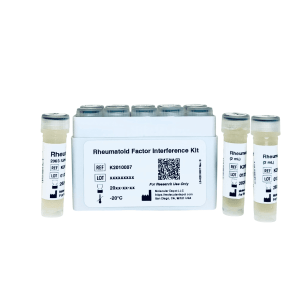
Rheumatoid Factor Interference Kit
- Original price was: $1,495.00.$695.00Current price is: $695.00.
-
- Sale!
- Interference, Research Kits
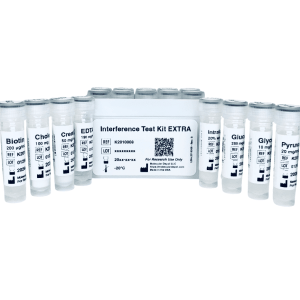
Interference Test Kit EXTRA
- Original price was: $1,295.00.$695.00Current price is: $695.00.
-
- Sale!
- Interference, Research Kits
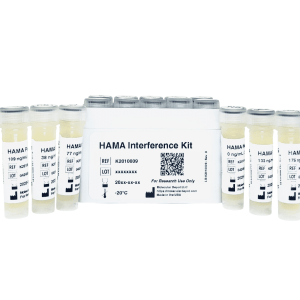
HAMA Interference Kit
- Original price was: $1,295.00.$695.00Current price is: $695.00.
-
- Sale!
- Buffers & Solutions, ELISA, Research Kits
ELISA Microplate Production Kit
- Original price was: $795.00.$495.00Current price is: $495.00.