
Intensive vs Standard Treatment of Hyperglycemia and Functional Outcome in Patients With Acute Ischemic Stroke: The SHINE Randomized Clinical Trial.
Authors of this article are:
Johnston KC, Bruno A, Pauls Q, Hall CE, Barrett KM, Barsan W, Fansler A, Van de Bruinhorst K, Janis S, Durkalski-Mauldin VL; Neurological Emergencies Treatment Trials Network and the SHINE Trial Investigators.
A summary of the article is shown below:
Importance: Hyperglycemia during acute ischemic stroke is common and is associated with worse outcomes. The efficacy of intensive treatment of hyperglycemia in this setting remains unknown.Objectives: To determine the efficacy of intensive treatment of hyperglycemia during acute ischemic stroke.Design, Setting, and Participants: The Stroke Hyperglycemia Insulin Network Effort (SHINE) randomized clinical trial included adult patients with hyperglycemia (glucose concentration of >110 mg/dL if had diabetes or ≥150 mg/dL if did not have diabetes) and acute ischemic stroke who were enrolled within 12 hours from stroke onset at 63 US sites between April 2012 and August 2018; follow-up ended in November 2018. The trial included 1151 patients who met eligibility criteria.Interventions: Patients were randomized to receive continuous intravenous insulin using a computerized decision support tool (target blood glucose concentration of 80-130 mg/dL [4.4-7.2 mmol/L]; intensive treatment group: n = 581) or insulin on a sliding scale that was administered subcutaneously (target blood glucose concentration of 80-179 mg/dL [4.4-9.9 mmol/L]; standard treatment group: n = 570) for up to 72 hours.Main Outcomes and Measures: The primary efficacy outcome was the proportion of patients with a favorable outcome based on the 90-day modified Rankin Scale score (a global stroke disability scale ranging from 0 [no symptoms or completely recovered] to 6 [death]) that was adjusted for baseline stroke severity.Results: Among 1151 patients who were randomized (mean age, 66 years [SD, 13.1 years]; 529 [46%] women, 920 [80%] with diabetes), 1118 (97%) completed the trial. Enrollment was stopped for futility based on prespecified interim analysis criteria. During treatment, the mean blood glucose level was 118 mg/dL (6.6 mmol/L) in the intensive treatment group and 179 mg/dL (9.9 mmol/L) in the standard treatment group. A favorable outcome occurred in 119 of 581 patients (20.5%) in the intensive treatment group and in 123 of 570 patients (21.6%) in the standard treatment group (adjusted relative risk, 0.97 [95% CI, 0.87 to 1.08], P = .55; unadjusted risk difference, -0.83% [95% CI, -5.72% to 4.06%]). Treatment was stopped early for hypoglycemia or other adverse events in 65 of 581 patients (11.2%) in the intensive treatment group and in 18 of 570 patients (3.2%) in the standard treatment group. Severe hypoglycemia occurred only among patients in the intensive treatment group (15/581 [2.6%]; risk difference, 2.58% [95% CI, 1.29% to 3.87%]).Conclusions and Relevance: Among patients with acute ischemic stroke and hyperglycemia, treatment with intensive vs standard glucose control for up to 72 hours did not result in a significant difference in favorable functional outcome at 90 days. These findings do not support using intensive glucose control in this setting.Trial Registration: ClinicalTrials.gov Identifier: NCT01369069.
Check out the article’s website on Pubmed for more information:
[link-preview url=https://www.ncbi.nlm.nih.gov/pubmed/31334795 forceshot=true]
This article is a good source of information and a good way to become familiar with topics such as: Aged;Brain Ischemia;Female;Fibrinolytic Agents;Humans;Hyperglycemia;Hypoglycemia;Hypoglycemic Agents;Infusions, Intravenous;Injections, Subcutaneous;Insulin;Male;Middle Aged;Stroke;Tissue Plasminogen Activator;Treatment Outcome.
New Chemicals from MOLECULAR DEPOT
-
- Sale!
- Chemicals, Interference, Lipids
Triglyceride Mix for Interference Testing
- Original price was: $895.00.$395.00Current price is: $395.00.
-
- Sale!
- Chemicals
Microparticle Stabilizer Solution
- Price range: $295.00 through $495.00
-
- Sale!
- Buffers & Solutions, Chemicals
Enzyme Acceptor Stabilization Buffer
- Original price was: $495.00.$250.00Current price is: $250.00.
-
- Sale!
- Buffers & Solutions, Chemicals
Enzyme Donor Stabilization Buffer
- Original price was: $495.00.$250.00Current price is: $250.00.
-
- Sale!
- Chemicals, Conjugates
Progesterone Biotin Conjugate Solution
- Original price was: $995.00.$595.00Current price is: $595.00.
-
- Sale!
- Buffers & Solutions, Chemicals
Microparticle Activation Buffer
- Price range: $395.00 through $695.00
-
- Sale!
- Buffers & Solutions, Chemicals
Microparticle Washing Buffer
- Price range: $395.00 through $695.00
-
- Sale!
- Buffers & Solutions, Chemicals
Microparticle Blocking Buffer
- Price range: $395.00 through $695.00
-
- Sale!
- Buffers & Solutions, Chemicals
Latex Microparticles Anti Aggregation Agent
- Price range: $295.00 through $3,500.00
-
- Sale!
- Chemicals
CPRG (Chlorophenol red-β-D-galactopyranoside)
- Original price was: $850.00.$395.00Current price is: $395.00.






New Proteins from MOLECULAR DEPOT
-
- Sale!
- Conjugates, Proteins
Captopril HSA Biotin Conjugate
- Original price was: $1,995.00.$995.00Current price is: $995.00.
-
- Sale!
- Proteins
PKC-α, Active, GST-tagged from Xanopus sp.
- Original price was: $1,595.00.$795.00Current price is: $795.00.
-
- Sale!
- Conjugates, Proteins
Prilocain BSA Biotin Conjugate
- Original price was: $1,995.00.$995.00Current price is: $995.00.
-
- Sale!
- Conjugates, Proteins
T3 (Triiodothyronine) BSA Biotin Conjugate
- Original price was: $1,995.00.$995.00Current price is: $995.00.
-
- Sale!
- Conjugates, Proteins
Pipemidic Acid BSA Biotin Conjugate
- Original price was: $1,995.00.$995.00Current price is: $995.00.
-
- Sale!
- Proteins
PKD2 Protein, Active (Recombinant Human)
- Original price was: $1,795.00.$895.00Current price is: $895.00.
-
- Sale!
- Conjugates, Proteins
Meropenem BSA Biotin Conjugate
- Original price was: $1,995.00.$995.00Current price is: $995.00.
-
- Sale!
- Conjugates, Proteins
Piperacillin BSA Biotin Conjugate
- Original price was: $1,995.00.$995.00Current price is: $995.00.
-
- Sale!
- Proteins
Protein A Peroxidase from Staphylococcus aureus/horseradish
- Original price was: $1,195.00.$595.00Current price is: $595.00.
-
- Sale!
- Conjugates, Proteins
Tobramycin BSA Biotin Conjugate
- Original price was: $1,995.00.$995.00Current price is: $995.00.

New Antibodies from MOLECULAR DEPOT
-
- Sale!
- Antibodies
Zebrafish wnt8b Antibody (Center)
- Original price was: $1,295.00.$695.00Current price is: $695.00.
-
- Sale!
- Antibodies
TRIB2 Antibody (N-Term)
- Original price was: $1,295.00.$695.00Current price is: $695.00.
-
- Sale!
- Antibodies
NTN1 Antibody (C-Term)
- Original price was: $1,295.00.$695.00Current price is: $695.00.
-
- Sale!
- Antibodies
NME1 Antibody
- Original price was: $1,295.00.$695.00Current price is: $695.00.
-
- Sale!
- Antibodies
Parp9 Antibody (C-Term)
- Original price was: $1,295.00.$695.00Current price is: $695.00.
-
- Sale!
- Antibodies
CDK1 Antibody
- Original price was: $1,295.00.$695.00Current price is: $695.00.
-
- Sale!
- Antibodies
DANRE hoxc11a Antibody (N-Term)
- Original price was: $1,295.00.$695.00Current price is: $695.00.
-
- Sale!
- Antibodies
VDR Antibody (Center)
- Original price was: $1,295.00.$695.00Current price is: $695.00.
-
- Sale!
- Antibodies
ITIH4 Antibody (C-Term)
- Original price was: $1,295.00.$695.00Current price is: $695.00.
-
- Sale!
- Antibodies
SEMA4B Antibody (C-Term)
- Original price was: $1,295.00.$695.00Current price is: $695.00.

New Research Kits from MOLECULAR DEPOT
-
- Sale!
- Interference, Research Kits
Interference Test Kit
- Original price was: $995.00.$495.00Current price is: $495.00.
-
- Sale!
- Research Kits
Alpha Complementation Kit Beta-galactosidase
- Original price was: $1,795.00.$895.00Current price is: $895.00.
-
- Sale!
- Research Kits
Crystallization Screen for Protein-DNA Complexes
- Original price was: $1,995.00.$995.00Current price is: $995.00.
-
- Sale!
- Molecular Biology, Research Kits
NativeFolder Bacterial Culture Medium
- Original price was: $795.00.$295.00Current price is: $295.00.
-
- Sale!
- Research Kits
CycloScreen Cyclodextrins Kit
- Original price was: $695.00.$350.00Current price is: $350.00.
-
- Sale!
- Research Kits
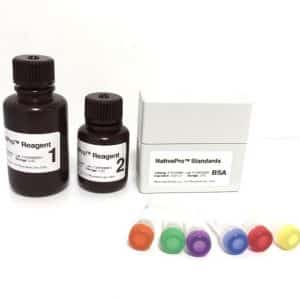
NativePro Bradford Protein Assay Kit (Automated)
- Original price was: $995.00.$495.00Current price is: $495.00.
-
- Sale!
- Interference, Research Kits
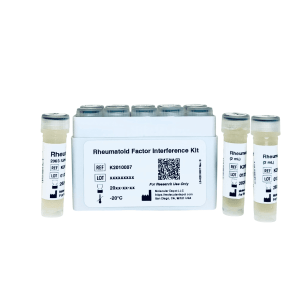
Rheumatoid Factor Interference Kit
- Original price was: $1,495.00.$695.00Current price is: $695.00.
-
- Sale!
- Interference, Research Kits
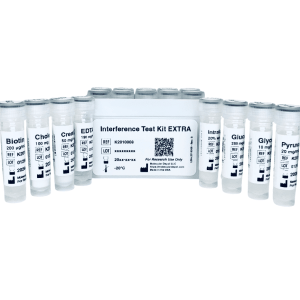
Interference Test Kit EXTRA
- Original price was: $1,295.00.$695.00Current price is: $695.00.
-
- Sale!
- Interference, Research Kits
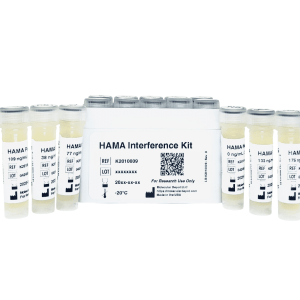
HAMA Interference Kit
- Original price was: $1,295.00.$695.00Current price is: $695.00.
-
- Sale!
- Buffers & Solutions, ELISA, Research Kits
ELISA Microplate Production Kit
- Original price was: $795.00.$495.00Current price is: $495.00.