
Role of Doppler ultrasound in predicting perinatal outcome in pregnancies complicated by late-onset fetal growth restriction at the time of diagnos…
Authors of this article are:
Rizzo G, Mappa I, Bitsadze V, Słodki M, Khizroeva J, Makatsarya A, D’Antonio F.
A summary of the article is shown below:
OBJECTIVE: Pregnancies complicated by late-onset fetal growth restriction (FGR) are at increased risk of short- and long-term morbidities. Despite this, identification of cases at higher risk of adverse perinatal outcome when FGR is diagnosed is challenging. The aims of this study were to elucidate the strength of association and predictive accuracy of maternal and fetal Dopplers in predicting perinatal outcome of fetuses affected by late-onset FGR at the time of diagnosis.METHODS: Prospective study of consecutive singleton pregnancies complicated by late-onset FGR. Estimated fetal weight (EFW), pulsatility index (PI) in the uterine, umbilical (UA), and middle cerebral (MCA) arteries, cerebro-placental ratio (CPR) and umbilical vein flow (normalized for fetal abdominal circumference) (UVBF/AC) were recorded at the time of the diagnosis of FGR. Composite adverse outcome was defined as the occurrence of either emergency caesarean section (CS) for fetal distress, 5′ Apgar score < 7, umbilical artery pH < 7.10 and neonatal admission to special care unit. Logistic regression and area under the curve (AUC) analyses were used to elucidate the strength of association and diagnostic accuracy of different ultrasound parameters for the prediction of composite adverse outcome.RESULTS: 243 consecutive singleton pregnancies complicated by late-onset FGR were included in the study. Composite adverse perinatal outcome occurred 32.5% (95% CI 26.7-38.8) of cases. The z values of mean uterine artery PI (2.23±1.34 vs. 1.988±0.89, p= 0.02) were higher, while the z-values of UVBF/AC (-1.93±0.88 vs. 0.89±0.94 p≤0.0001), MCA PI (-1.56±0.93 vs. -1.22±0.84, p=0.004) and CPR (-1.89±1.12 vs. -1.44±1.02, p=0.002) were lower in pregnancies who experienced compared to those who did not experience composite adverse outcome. On multivariable logistic regression analysis, mean uterine artery PI (p= 0.04), CPR (p= 0.02) and UVBF/AC (p= 0.001) were independently associated with composite adverse perinatal outcome. UVBF/AC had an AUC of 0.723 (95% CI 0.64-0.80) for composite adverse outcome and with a better accuracy compared to mean uterine artery (AUC: 0.593), CPR (AUC: 0.615). A multiparametric prediction model including MCA, Uterine arteries and UVBF had an AUC of 0.745 (95% CI 0.66-0.83) for the prediction of composite adverse outcome.CONCLUSION: CPR and uterine artery Dopplers are independently associated with composite adverse perinatal outcome in pregnancies complicated by late-onset FGR at the time of diagnosis. Despite this, their diagnostic performance for adverse perinatal outcome is low. UVBF/AC showed a better accuracy for composite adverse outcome, although its usefulness in clinical practice as standalone test for adverse pregnancy outcome requires further evidence. This article is protected by copyright. All rights reserved.This article is protected by copyright. All rights reserved.
Check out the article’s website on Pubmed for more information:
[link-preview url=https://www.ncbi.nlm.nih.gov/pubmed/31343783 forceshot=true]
This article is a good source of information and a good way to become familiar with topics such as: Middle cerebral artery Doppler;Placental cerebral ratio;Umbilical artery Doppler;adverse perinatal outcome;late fetal growth restriction;umbilical vein flow;uterine artery Doppler.
New Chemicals from MOLECULAR DEPOT
-
- Sale!
- Chemicals, Interference, Lipids
Triglyceride Mix for Interference Testing
- Original price was: $895.00.$395.00Current price is: $395.00.
-
- Sale!
- Chemicals
Microparticle Stabilizer Solution
- Price range: $295.00 through $495.00
-
- Sale!
- Buffers & Solutions, Chemicals
Enzyme Acceptor Stabilization Buffer
- Original price was: $495.00.$250.00Current price is: $250.00.
-
- Sale!
- Buffers & Solutions, Chemicals
Enzyme Donor Stabilization Buffer
- Original price was: $495.00.$250.00Current price is: $250.00.
-
- Sale!
- Chemicals, Conjugates
Progesterone Biotin Conjugate Solution
- Original price was: $995.00.$595.00Current price is: $595.00.
-
- Sale!
- Buffers & Solutions, Chemicals
Microparticle Activation Buffer
- Price range: $395.00 through $695.00
-
- Sale!
- Buffers & Solutions, Chemicals
Microparticle Washing Buffer
- Price range: $395.00 through $695.00
-
- Sale!
- Buffers & Solutions, Chemicals
Microparticle Blocking Buffer
- Price range: $395.00 through $695.00
-
- Sale!
- Buffers & Solutions, Chemicals
Latex Microparticles Anti Aggregation Agent
- Price range: $295.00 through $3,500.00
-
- Sale!
- Chemicals
CPRG (Chlorophenol red-β-D-galactopyranoside)
- Original price was: $850.00.$395.00Current price is: $395.00.






New Proteins from MOLECULAR DEPOT
-
- Sale!
- Conjugates, Proteins
Captopril HSA Biotin Conjugate
- Original price was: $1,995.00.$995.00Current price is: $995.00.
-
- Sale!
- Proteins
PKC-α, Active, GST-tagged from Xanopus sp.
- Original price was: $1,595.00.$795.00Current price is: $795.00.
-
- Sale!
- Conjugates, Proteins
Prilocain BSA Biotin Conjugate
- Original price was: $1,995.00.$995.00Current price is: $995.00.
-
- Sale!
- Conjugates, Proteins
T3 (Triiodothyronine) BSA Biotin Conjugate
- Original price was: $1,995.00.$995.00Current price is: $995.00.
-
- Sale!
- Conjugates, Proteins
Pipemidic Acid BSA Biotin Conjugate
- Original price was: $1,995.00.$995.00Current price is: $995.00.
-
- Sale!
- Proteins
PKD2 Protein, Active (Recombinant Human)
- Original price was: $1,795.00.$895.00Current price is: $895.00.
-
- Sale!
- Conjugates, Proteins
Meropenem BSA Biotin Conjugate
- Original price was: $1,995.00.$995.00Current price is: $995.00.
-
- Sale!
- Conjugates, Proteins
Piperacillin BSA Biotin Conjugate
- Original price was: $1,995.00.$995.00Current price is: $995.00.
-
- Sale!
- Proteins
Protein A Peroxidase from Staphylococcus aureus/horseradish
- Original price was: $1,195.00.$595.00Current price is: $595.00.
-
- Sale!
- Conjugates, Proteins
Tobramycin BSA Biotin Conjugate
- Original price was: $1,995.00.$995.00Current price is: $995.00.

New Antibodies from MOLECULAR DEPOT
-
- Sale!
- Antibodies
SUMO1 Antibody (C-Term)
- Original price was: $1,295.00.$695.00Current price is: $695.00.
-
- Sale!
- Antibodies
IL18RAP Antibody (N-Term)
- Original price was: $1,295.00.$695.00Current price is: $695.00.
-
- Sale!
- Antibodies
DENR Antibody
- Original price was: $1,295.00.$695.00Current price is: $695.00.
-
- Sale!
- Antibodies
Mouse DHFR Antibody (C-Term)
- Original price was: $1,295.00.$695.00Current price is: $695.00.
-
- Sale!
- Antibodies
BCL6B Antibody (Center)
- Original price was: $1,295.00.$695.00Current price is: $695.00.
-
- Sale!
- Antibodies
RSK4 Antibody (N-Term)
- Original price was: $1,295.00.$695.00Current price is: $695.00.
-
- Sale!
- Antibodies
IRF3 Antibody
- Original price was: $1,295.00.$695.00Current price is: $695.00.
-
- Sale!
- Antibodies
DAAM1-T361 Antibody (N-Term)
- Original price was: $1,295.00.$695.00Current price is: $695.00.
-
- Sale!
- Antibodies
RHEX Antibody (C-Term)
- Original price was: $1,295.00.$695.00Current price is: $695.00.
-
- Sale!
- Antibodies
Myoglobin Antibody
- Original price was: $1,295.00.$695.00Current price is: $695.00.
New Research Kits from MOLECULAR DEPOT
-
- Sale!
- Interference, Research Kits
Interference Test Kit
- Original price was: $995.00.$495.00Current price is: $495.00.
-
- Sale!
- Research Kits
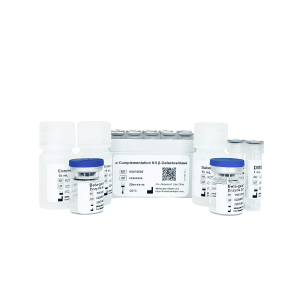
Alpha Complementation Kit Beta-galactosidase
- Original price was: $1,795.00.$895.00Current price is: $895.00.
-
- Sale!
- Research Kits
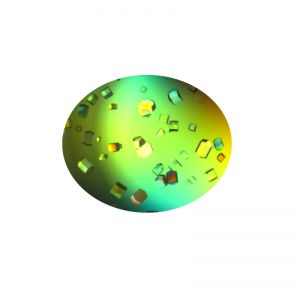
Crystallization Screen for Protein-DNA Complexes
- Original price was: $1,995.00.$995.00Current price is: $995.00.
-
- Sale!
- Molecular Biology, Research Kits
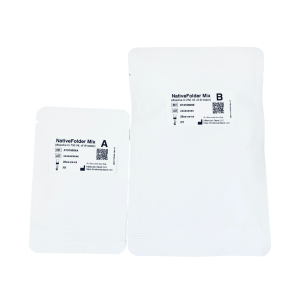
NativeFolder Bacterial Culture Medium
- Original price was: $795.00.$295.00Current price is: $295.00.
-
- Sale!
- Research Kits
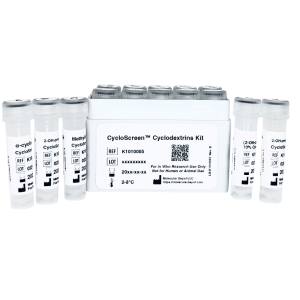
CycloScreen Cyclodextrins Kit
- Original price was: $695.00.$350.00Current price is: $350.00.
-
- Sale!
- Research Kits
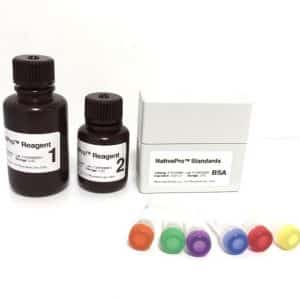
NativePro Bradford Protein Assay Kit (Automated)
- Original price was: $995.00.$495.00Current price is: $495.00.
-
- Sale!
- Interference, Research Kits
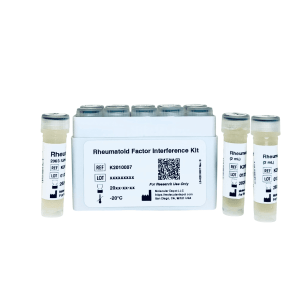
Rheumatoid Factor Interference Kit
- Original price was: $1,495.00.$695.00Current price is: $695.00.
-
- Sale!
- Interference, Research Kits
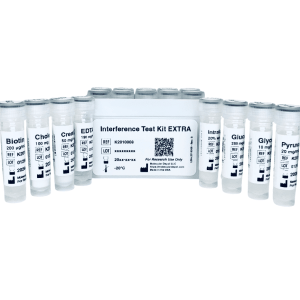
Interference Test Kit EXTRA
- Original price was: $1,295.00.$695.00Current price is: $695.00.
-
- Sale!
- Interference, Research Kits
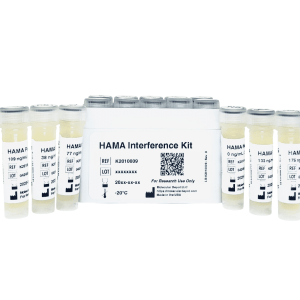
HAMA Interference Kit
- Original price was: $1,295.00.$695.00Current price is: $695.00.
-
- Sale!
- Buffers & Solutions, ELISA, Research Kits
ELISA Microplate Production Kit
- Original price was: $795.00.$495.00Current price is: $495.00.