
Cochlear Implant Outcomes in Large Vestibular Aqueduct Syndrome-Should We Provide Cochlear Implants Earlier?
Authors of this article are:
Hall AC, Kenway B, Sanli H, Birman CS.
A summary of the article is shown below:
OBJECTIVE: Examine postoperative speech perception outcomes in a large vestibular aqueduct syndrome (LVAS) patients at a major cochlear implantation center.STUDY DESIGN: Retrospective analysis of the Sydney Cochlear Implant Centre (SCIC) database and medical records from January 1994 to December 2015 was performed.SETTING: Tertiary referral center.PATIENTS: Patients with a diagnosis of LVAS who received a cochlear implant (CI). Only those with speech perception outcomes recorded at least 12 months post implant were included in our analysis.INTERVENTION(S): Therapeutic.MAIN OUTCOME MEASURE(S): Postoperative speech perception scores.RESULTS: Between 1994 and 2015, 176 adult and pediatric patients with a diagnosis of LVAS underwent cochlear implantation at SCIC. Postoperative Bamford-Kowal Bench (BKB) sentence test scores were obtained for 97 patients. The postoperative median BKB score was 93% with a lower quartile score of 85% and an upper quartile score of 98%. Smaller numbers were available for post-CI City University of New York (CUNY) and Consonant-Nucleus-Consonant (CNC) word scores yet similar excellent results were seen.CONCLUSIONS: Our study results suggest the CI should be considered when BKB scores have dropped to 85%. We suggest that rather than LVAS cases representing a challenge to cochlear implantation, they are amongst the best candidates for surgery, and should receive a CI at an earlier stage in hearing loss, when they have better speech perception. This allows stable hearing to be established earlier along with excellent speech perception outcomes.
Check out the article’s website on Pubmed for more information:
[link-preview url=https://www.ncbi.nlm.nih.gov/pubmed/31348128 forceshot=true]
This article is a good source of information and a good way to become familiar with topics such as: n/a.
New Chemicals from MOLECULAR DEPOT
Triglyceride Mix for Interference Testing
Microparticle Stabilizer Solution
Enzyme Acceptor Stabilization Buffer
Enzyme Donor Stabilization Buffer
Progesterone Biotin Conjugate Solution
Microparticle Activation Buffer
Microparticle Washing Buffer
Microparticle Blocking Buffer
Latex Microparticles Anti Aggregation Agent
CPRG (Chlorophenol red-β-D-galactopyranoside)






New Antibodies from MOLECULAR DEPOT
Zebrafish wnt8b Antibody (Center)
TRIB2 Antibody (N-Term)
NTN1 Antibody (C-Term)
NME1 Antibody
Parp9 Antibody (C-Term)
CDK1 Antibody
DANRE hoxc11a Antibody (N-Term)
VDR Antibody (Center)
ITIH4 Antibody (C-Term)
SEMA4B Antibody (C-Term)

New Proteins from MOLECULAR DEPOT
Captopril HSA Biotin Conjugate
PKC-α, Active, GST-tagged from Xanopus sp.
Prilocain BSA Biotin Conjugate
T3 (Triiodothyronine) BSA Biotin Conjugate
Pipemidic Acid BSA Biotin Conjugate
PKD2 Protein, Active (Recombinant Human)
Meropenem BSA Biotin Conjugate
Piperacillin BSA Biotin Conjugate
Protein A Peroxidase from Staphylococcus aureus/horseradish
Tobramycin BSA Biotin Conjugate

New Research Kits from MOLECULAR DEPOT
Interference Test Kit
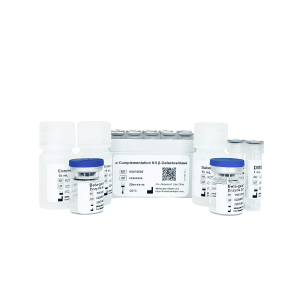
Alpha Complementation Kit Beta-galactosidase
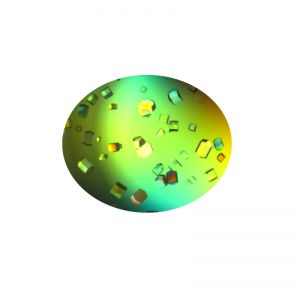
Crystallization Screen for Protein-DNA Complexes
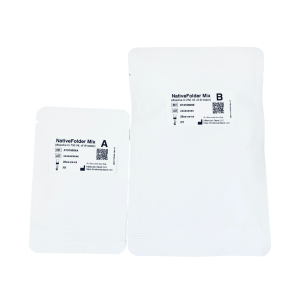
NativeFolder Bacterial Culture Medium
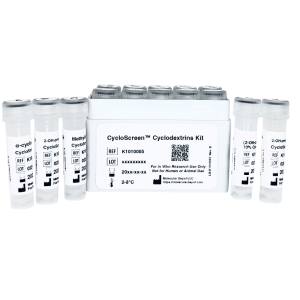
CycloScreen Cyclodextrins Kit
NativePro Bradford Protein Assay Kit (Automated)
Rheumatoid Factor Interference Kit
Interference Test Kit EXTRA
HAMA Interference Kit
ELISA Microplate Production Kit