ACR Ultrasound Liver Reporting and Data System: Multicenter Assessment of Clinical Performance at One Year.
Authors of this article are:
Millet JD, Kamaya A, Choi HH, Dahiya N, Murphy PM, Naveed MZ, O’Boyle M, Parra LA, Perez MG, Pirmoazen AM, Rodgers SK, Wasnik AP, Maturen KE.
A summary of the article is shown below:
PURPOSE: The aim of this study was to evaluate the clinical performance of the ACR’s Ultrasound Liver Reporting and Data System (US LI-RADS™) for detecting hepatocellular carcinoma (HCC) in patients at high risk for HCC.METHODS: In this retrospective, multicenter study, 2,050 patients at high risk for HCC (1,078 men and 972 women; mean age, 57.7 years) at five sites in the United States had undergone screening liver ultrasound from January 2017 to February 2018, and US LI-RADS observation categories and visualization scores were assigned on a clinical basis. Ultrasound reports and patient records were retrospectively reviewed and follow-up imaging studies and/or pathologic reports recorded. Descriptive statistics were generated, and multivariate logistic regression analysis was used to analyze the relationship of clinical and reader-based predictors of limited visualization. Diagnostic performance data were calculated in the subset of patients with confirmatory testing.RESULTS: The most common indications for HCC screening were cirrhosis (n = 1,054 [51.4%]), noncirrhotic hepatitis B virus infection (n = 555 [27.1%]), and noncirrhotic hepatitis C virus infection (n = 234 [11.4%]). US LI-RADS observation categories assigned were US-1 (negative) in 90.4% (n = 1,854), US-2 (subthreshold) in 4.6% (n = 95), and US-3 (positive) in 4.9% (n = 101). Visualization scores were A (no or minimal limitations) in 76.8% (n = 1,575), B (moderate limitations) in 18.9% (n = 388), and C (severe limitations) in 4.2% (n = 87). Confirmatory tests, including multiphase contrast-enhanced CT or MRI (n = 331) or histopathology (n = 18), were available for 349 patients (17.0%). The sensitivity of US LI-RADS in this subset of patients was 82.4%, specificity was 74.2%, positive predictive value was 35.3%, and negative predictive value was 96.1%.CONCLUSIONS: Approximately 90% of US LI-RADS screening examinations were negative, 5% subthreshold, and 5% positive. Visualization scores were diagnostically acceptable in the vast majority (>95%) of examinations. US LI-RADS emphasized sensitivity and negative predictive value, which are key characteristics of a screening test.Copyright © 2019 American College of Radiology. Published by Elsevier Inc. All rights reserved.
Check out the article’s website on Pubmed for more information:
[link-preview url=https://www.ncbi.nlm.nih.gov/pubmed/31173745 forceshot=true]
This article is a good source of information and a good way to become familiar with topics such as: LI-RADS; Ultrasound; hepatocellular carcinoma; screening; surveillance.
NativeFolder: The Only Bacterial Culture Medium for the Expression of Soluble Proteins
-
- Sale!
- Molecular Biology, Research Kits
NativeFolder Bacterial Culture Medium
- Original price was: $795.00.$295.00Current price is: $295.00.

Interference Test Kit for Assay Validation
-
- Sale!
- Interference, Research Kits
Interference Test Kit
- Original price was: $995.00.$495.00Current price is: $495.00.

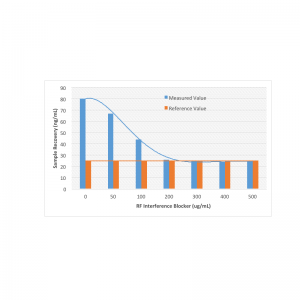
Rheumatoid Factor Interference Blocker
-
- Sale!
- Antibodies, Interference
Rheumatoid Factor Interference Blocker
- Original price was: $595.00.$395.00Current price is: $395.00.

New Antibodies from MOLECULAR DEPOT
-
- Sale!
- Antibodies, Biochemistry
Rabbit Polyclonal CTNL1 CTNNAL1 Antibody (Human, Mouse)
- Original price was: $1,595.00.$795.00Current price is: $795.00.
-
- Sale!
- Antibodies, Biochemistry
Rabbit Monoclonal CXCL11 Antibody
- Original price was: $1,595.00.$795.00Current price is: $795.00.
-
- Sale!
- Antibodies, Biochemistry
Rabbit Polyclonal Cullin 4a (CUL4A) Antibody (Human)
- Original price was: $1,595.00.$795.00Current price is: $795.00.
-
- Sale!
- Antibodies, Biochemistry
Rabbit Polyclonal Cullin 1/CUL1 (N-Terminus) Antibody (Human, Mouse, Rat)
- Original price was: $1,595.00.$795.00Current price is: $795.00.
-
- Sale!
- Antibodies, Biochemistry
Rabbit Polyclonal CTNA2 CTNNA2 Antibody (Human, Mouse)
- Original price was: $1,595.00.$795.00Current price is: $795.00.
-
- Sale!
- Antibodies, Biochemistry
Rabbit Monoclonal CTR1/SLC31A1 Antibody
- Original price was: $1,595.00.$795.00Current price is: $795.00.
-
- Sale!
- Antibodies, Biochemistry
Mouse Monoclonal CTLA4 Antibody
- Original price was: $1,795.00.$895.00Current price is: $895.00.
-
- Sale!
- Antibodies, Biochemistry
Rabbit Polyclonal CXCL5 (A38-Q130) Antibody (Rat)
- Original price was: $1,595.00.$795.00Current price is: $795.00.
-
- Sale!
- Antibodies, Biochemistry
Rabbit Polyclonal CXCR1 (N-Terminus) Antibody (Human)
- Original price was: $1,595.00.$795.00Current price is: $795.00.
-
- Sale!
- Antibodies, Biochemistry
Anti-CXB5 GJB5 Antibody
- Original price was: $1,595.00.$795.00Current price is: $795.00.
New Proteins from MOLECULAR DEPOT
-
- Sale!
- Conjugates, Proteins
Captopril HSA Biotin Conjugate
- Original price was: $1,995.00.$995.00Current price is: $995.00.
-
- Sale!
- Conjugates, Proteins
Aminopenicillic Acid HRP Conjugate
- Original price was: $1,595.00.$795.00Current price is: $795.00.
-
- Sale!
- Biochemistry, Proteins
PKC-α, Active, GST-tagged from Xanopus sp.
- Original price was: $1,595.00.$795.00Current price is: $795.00.
-
- Sale!
- Conjugates, Proteins
Prilocain HSA Biotin Conjugate
- Original price was: $1,995.00.$995.00Current price is: $995.00.
-
- Sale!
- Conjugates, Proteins
T3 (Triiodothyronine) HSA Biotin Conjugate
- Original price was: $1,995.00.$995.00Current price is: $995.00.
-
- Sale!
- Conjugates, Proteins
Pipemidic acid HSA Biotin Conjugate
- Original price was: $1,995.00.$995.00Current price is: $995.00.
-
- Sale!
- Biochemistry, Proteins
PKD2 Protein, Active (Recombinant Human)
- Original price was: $1,795.00.$895.00Current price is: $895.00.
-
- Sale!
- Conjugates, Proteins
Meropenem BSA Biotin Conjugate
- Original price was: $1,995.00.$995.00Current price is: $995.00.
-
- Sale!
- Conjugates, Proteins
Piperacillin HSA Biotin Conjugate
- Original price was: $1,995.00.$995.00Current price is: $995.00.
-
- Sale!
- Biochemistry, Proteins
Protein A Peroxidase from Staphylococcus aureus/horseradish
- Original price was: $1,195.00.$595.00Current price is: $595.00.


New Chemicals from MOLECULAR DEPOT
-
- Sale!
- Chemicals, Interference, Lipids
Triglyceride Mix for Interference Testing
- Original price was: $895.00.$395.00Current price is: $395.00.
-
- Sale!
- Chemicals
Microparticle Stabilizer Solution
- Price range: $295.00 through $495.00
-
- Sale!
- Buffers & Solutions, Chemicals
Enzyme Acceptor Stabilization Buffer
- Original price was: $495.00.$250.00Current price is: $250.00.
-
- Sale!
- Buffers & Solutions, Chemicals
Enzyme Donor Stabilization Buffer
- Original price was: $495.00.$250.00Current price is: $250.00.
-
- Sale!
- Chemicals, Conjugates
Progesterone Biotin Conjugate Solution
- Original price was: $650.00.$350.00Current price is: $350.00.
-
- Sale!
- Buffers & Solutions, Chemicals
Microparticle Activation Buffer
- Price range: $295.00 through $495.00
-
- Sale!
- Buffers & Solutions, Chemicals
Microparticle Washing Buffer
- Price range: $295.00 through $495.00
-
- Sale!
- Buffers & Solutions, Chemicals
Microparticle Blocking Buffer
- Price range: $395.00 through $695.00
-
- Sale!
- Buffers & Solutions, Chemicals
Latex Microparticles Anti Aggregation Agent
- Price range: $295.00 through $3,500.00
-
- Sale!
- Chemicals
CPRG (Chlorophenol red-β-D-galactopyranoside)
- Original price was: $850.00.$395.00Current price is: $395.00.