Prenatal diagnosis of cri-du-chat syndrome by SNP array: report of twelve cases and review of the literature.
Authors of this article are:
Su J, Fu H, Xie B, Lu W, Li W, Wei Y, Zhang Q, Wei S, Chen Q, Lu Y, Jiang T, Luo J, Qin Z.
A summary of the article is shown below:
Background: Cri-du-chat syndrome (CdCS; OMIM#123450) is a classic contiguous gene syndrome caused by chromosome 5p terminal deletion (5p-), which characterized by a high-pitched cat-like cry, developmental delay, severe psychomotor, mental retardation, and dysmorphic features in infancy. Prenatal diagnosis of CdCS is difficult due to the non-specific ultrasound features. And reports using array analysis are rare. This study presented the first retrospective analysis of prenatal series of CdCS fetuses diagnosed by single nucleotide polymorphism (SNP) array in China.Case presentation: A total of 35,233 pregnant women were enrolled from Jan 2014 to April 2019 in our center, there are twelve 5p- cases with abnormal sonographic signs revealed by SNP array, giving an incidence of 0.034% (12/35,233). Clinical information and molecular basis included: maternal demographics, indications for invasive testing, sonographic findings and SNP array results. Among all the 5p- cases revealed, nine cases were diagnosed by both karyotyping and SNP array, three cases were detected only by SNP array. Half of our cases (6/12) had an isolated 5p terminal deletion, which sizes ranged from 9.0 Mb to 30 Mb. The other half of cases (6/12) characterized by unbalanced translocation, with sex ratio 7:5 (female: male), when combine the clinical features observed from this study and available literature, the most frequent anomaly observed in prenatal ultrasound examination of CdCS was cerebral abnormalities, accounted for 44.4% (16/36) of the existing cases. Features that are less consistent included: choroid plexus cyst (13.8%, 5/36), single umbilical artery (13.3%, 4/30), ventricular septal defect (11.1%, 4/36), hydrops fetalis (8.3%, 3/36), ascites (8.3%, 3/36), increased NT/NF (8.3%, 3/36), absent/severely hypoplastic nasal bone (5.5%, 2/36), in order.Conclusion: Prenatal findings such as cerebral abnormalities, absent/hypoplastic nasal bone, hydrops fetalis, ascites or encephalocele may act as suggestive signs of CdCS or other microdeletion/duplication syndromes. Combining typical karyotyping with chromosomal microarray analysis (CMA) is a definitive method for a precise diagnosis of CdCS and provides more accurate results in order to offer genetic counseling to families which need to deal with cryptic aberrations.© The Author(s). 2019.
Check out the article’s website on Pubmed for more information:
[link-preview url=https://www.ncbi.nlm.nih.gov/pubmed/31827621 forceshot=true]
This article is a good source of information and a good way to become familiar with topics such as: Cri-du-chat syndrome; Prenatal diagnosis; SNP microarray; Ultrasound findings.
NativeFolder: The Only Bacterial Culture Medium for the Expression of Soluble Proteins
-
- Sale!
- Molecular Biology, Research Kits
NativeFolder Bacterial Culture Medium
- Original price was: $795.00.$295.00Current price is: $295.00.

Interference Test Kit for Assay Validation
-
- Sale!
- Interference, Research Kits
Interference Test Kit
- Original price was: $995.00.$495.00Current price is: $495.00.

Rheumatoid Factor Interference Blocker
-
- Sale!
- Antibodies, Interference
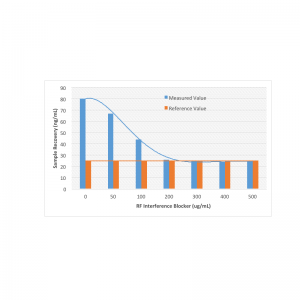
Rheumatoid Factor Interference Blocker
- Original price was: $595.00.$395.00Current price is: $395.00.

New Antibodies from MOLECULAR DEPOT
-
- Sale!
- Antibodies
Zebrafish wnt8b Antibody (Center)
- Original price was: $1,295.00.$695.00Current price is: $695.00.
-
- Sale!
- Antibodies
TRIB2 Antibody (N-Term)
- Original price was: $1,295.00.$695.00Current price is: $695.00.
-
- Sale!
- Antibodies
NTN1 Antibody (C-Term)
- Original price was: $1,295.00.$695.00Current price is: $695.00.
-
- Sale!
- Antibodies
NME1 Antibody
- Original price was: $1,295.00.$695.00Current price is: $695.00.
-
- Sale!
- Antibodies
Parp9 Antibody (C-Term)
- Original price was: $1,295.00.$695.00Current price is: $695.00.
-
- Sale!
- Antibodies
CDK1 Antibody
- Original price was: $1,295.00.$695.00Current price is: $695.00.
-
- Sale!
- Antibodies
DANRE hoxc11a Antibody (N-Term)
- Original price was: $1,295.00.$695.00Current price is: $695.00.
-
- Sale!
- Antibodies
VDR Antibody (Center)
- Original price was: $1,295.00.$695.00Current price is: $695.00.
-
- Sale!
- Antibodies
ITIH4 Antibody (C-Term)
- Original price was: $1,295.00.$695.00Current price is: $695.00.
-
- Sale!
- Antibodies
SEMA4B Antibody (C-Term)
- Original price was: $1,295.00.$695.00Current price is: $695.00.

New Proteins from MOLECULAR DEPOT
-
- Sale!
- Conjugates, Proteins
Captopril HSA Biotin Conjugate
- Original price was: $1,995.00.$995.00Current price is: $995.00.
-
- Sale!
- Proteins
PKC-α, Active, GST-tagged from Xanopus sp.
- Original price was: $1,595.00.$795.00Current price is: $795.00.
-
- Sale!
- Conjugates, Proteins
Prilocain BSA Biotin Conjugate
- Original price was: $1,995.00.$995.00Current price is: $995.00.
-
- Sale!
- Conjugates, Proteins
T3 (Triiodothyronine) BSA Biotin Conjugate
- Original price was: $1,995.00.$995.00Current price is: $995.00.
-
- Sale!
- Conjugates, Proteins
Pipemidic Acid BSA Biotin Conjugate
- Original price was: $1,995.00.$995.00Current price is: $995.00.
-
- Sale!
- Proteins
PKD2 Protein, Active (Recombinant Human)
- Original price was: $1,795.00.$895.00Current price is: $895.00.
-
- Sale!
- Conjugates, Proteins
Meropenem BSA Biotin Conjugate
- Original price was: $1,995.00.$995.00Current price is: $995.00.
-
- Sale!
- Conjugates, Proteins
Piperacillin BSA Biotin Conjugate
- Original price was: $1,995.00.$995.00Current price is: $995.00.
-
- Sale!
- Proteins
Protein A Peroxidase from Staphylococcus aureus/horseradish
- Original price was: $1,195.00.$595.00Current price is: $595.00.
-
- Sale!
- Conjugates, Proteins
Tobramycin BSA Biotin Conjugate
- Original price was: $1,995.00.$995.00Current price is: $995.00.

New Chemicals from MOLECULAR DEPOT
-
- Sale!
- Chemicals, Interference, Lipids
Triglyceride Mix for Interference Testing
- Original price was: $895.00.$395.00Current price is: $395.00.
-
- Sale!
- Chemicals
Microparticle Stabilizer Solution
- Price range: $295.00 through $495.00
-
- Sale!
- Buffers & Solutions, Chemicals
Enzyme Acceptor Stabilization Buffer
- Original price was: $495.00.$250.00Current price is: $250.00.
-
- Sale!
- Buffers & Solutions, Chemicals
Enzyme Donor Stabilization Buffer
- Original price was: $495.00.$250.00Current price is: $250.00.
-
- Sale!
- Chemicals, Conjugates
Progesterone Biotin Conjugate Solution
- Original price was: $995.00.$595.00Current price is: $595.00.
-
- Sale!
- Buffers & Solutions, Chemicals
Microparticle Activation Buffer
- Price range: $395.00 through $695.00
-
- Sale!
- Buffers & Solutions, Chemicals
Microparticle Washing Buffer
- Price range: $395.00 through $695.00
-
- Sale!
- Buffers & Solutions, Chemicals
Microparticle Blocking Buffer
- Price range: $395.00 through $695.00
-
- Sale!
- Buffers & Solutions, Chemicals
Latex Microparticles Anti Aggregation Agent
- Price range: $295.00 through $3,500.00
-
- Sale!
- Chemicals
CPRG (Chlorophenol red-β-D-galactopyranoside)
- Original price was: $850.00.$395.00Current price is: $395.00.