Absence of heterozygosity detected by single-nucleotide polymorphism array in prenatal diagnosis.
Authors of this article are:
Liu J, He Z, Lin S, Wang Y, Huang L, Huang X, Luo Y.
A summary of the article is shown below:
OBJECTIVES: We aimed to investigate the general occurrence and clinical significance of absence of heterozygosity (AOH), detected by single-nucleotide polymorphism (SNP) array, in prenatal diagnosis.METHODS: We recruited 10,294 pregnant women undergoing invasive prenatal diagnosis at our fetal medicine center over 6 years. All women underwent SNP array using the Affymetrix CytoScan HD array platform. AOH was defined as a chromosomal homozygosity segment with neutral copy number. AOH cases with size over 10 Mb were further analyzed, and the clinical features were reviewed.RESULTS: In total, 100 patients (0.97%, 100/10294) with AOH were identified; in 81% of these (81/100), AOH occurred in a single chromosome, while 19% of the patients (19/100) had multiple AOHs in different chromosomes. AOH was observed on all chromosomes, and chromosome X, 2, and 16 were the most frequently involved. The length of AOH ranged from partial chromosome (9.002-80.222 Mb) to the entire chromosome. Similar AOH regions displayed varied clinical manifestations. In total, 55 patients presented with concomitant ultrasound abnormalities, and the most common ultrasonographic abnormalities were multiple abnormalities (25.5%, 14/55), genitourinary malformations (14.5%, 8/55), and fetal growth restriction (9.1%, 5/55). Notably, the rate of adverse perinatal outcomes in fetuses with AOH and ultrasound abnormalities (64.6%, 31/48) was higher than the rate in fetuses with AOH but without ultrasound abnormalities (14.3%, 5/35). Further, non-invasive prenatal testing using cell-free fetal DNA from maternal blood indicated chromosomal copy number abnormalities in 11 patients; however, they were confirmed as AOH through SNP array of the amniotic fluid.CONCLUSIONS: Genetic counseling regarding AOH in prenatal diagnosis remains challenging. To comprehensively evaluate its significance, we propose a management strategy involving further serial ultrasound examinations, parental verification, whole-exome sequencing, placental study, and effective follow-up. This article is protected by copyright. All rights reserved.This article is protected by copyright. All rights reserved.
Check out the article’s website on Pubmed for more information:
[link-preview url=https://www.ncbi.nlm.nih.gov/pubmed/31840905 forceshot=true]
This article is a good source of information and a good way to become familiar with topics such as: Absence of heterozygosity; Chromosomal microarray analysis; Genetic counseling; Loss of heterozygosity; Prenatal diagnosis; Single-nucleotide polymorphism array; Uniparental disomy.
NativeFolder: The Only Bacterial Culture Medium for the Expression of Soluble Proteins
-
- Sale!
- Molecular Biology, Research Kits
NativeFolder Bacterial Culture Medium
- Original price was: $795.00.$295.00Current price is: $295.00.

Interference Test Kit for Assay Validation
-
- Sale!
- Interference, Research Kits
Interference Test Kit
- Original price was: $995.00.$495.00Current price is: $495.00.

Rheumatoid Factor Interference Blocker
-
- Sale!
- Antibodies, Interference
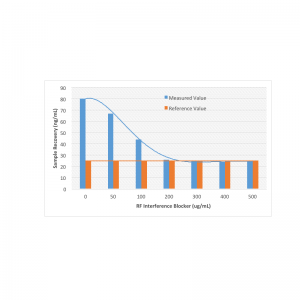
Rheumatoid Factor Interference Blocker
- Original price was: $595.00.$395.00Current price is: $395.00.

New Antibodies from MOLECULAR DEPOT
-
- Sale!
- Antibodies
SUMO1 Antibody (C-Term)
- Original price was: $1,295.00.$695.00Current price is: $695.00.
-
- Sale!
- Antibodies
IL18RAP Antibody (N-Term)
- Original price was: $1,295.00.$695.00Current price is: $695.00.
-
- Sale!
- Antibodies
DENR Antibody
- Original price was: $1,295.00.$695.00Current price is: $695.00.
-
- Sale!
- Antibodies
Mouse DHFR Antibody (C-Term)
- Original price was: $1,295.00.$695.00Current price is: $695.00.
-
- Sale!
- Antibodies
BCL6B Antibody (Center)
- Original price was: $1,295.00.$695.00Current price is: $695.00.
-
- Sale!
- Antibodies
RSK4 Antibody (N-Term)
- Original price was: $1,295.00.$695.00Current price is: $695.00.
-
- Sale!
- Antibodies
IRF3 Antibody
- Original price was: $1,295.00.$695.00Current price is: $695.00.
-
- Sale!
- Antibodies
DAAM1-T361 Antibody (N-Term)
- Original price was: $1,295.00.$695.00Current price is: $695.00.
-
- Sale!
- Antibodies
RHEX Antibody (C-Term)
- Original price was: $1,295.00.$695.00Current price is: $695.00.
-
- Sale!
- Antibodies
Myoglobin Antibody
- Original price was: $1,295.00.$695.00Current price is: $695.00.
New Proteins from MOLECULAR DEPOT
-
- Sale!
- Conjugates, Proteins
Captopril HSA Biotin Conjugate
- Original price was: $1,995.00.$995.00Current price is: $995.00.
-
- Sale!
- Proteins
PKC-α, Active, GST-tagged from Xanopus sp.
- Original price was: $1,595.00.$795.00Current price is: $795.00.
-
- Sale!
- Conjugates, Proteins
Prilocain BSA Biotin Conjugate
- Original price was: $1,995.00.$995.00Current price is: $995.00.
-
- Sale!
- Conjugates, Proteins
T3 (Triiodothyronine) BSA Biotin Conjugate
- Original price was: $1,995.00.$995.00Current price is: $995.00.
-
- Sale!
- Conjugates, Proteins
Pipemidic Acid BSA Biotin Conjugate
- Original price was: $1,995.00.$995.00Current price is: $995.00.
-
- Sale!
- Proteins
PKD2 Protein, Active (Recombinant Human)
- Original price was: $1,795.00.$895.00Current price is: $895.00.
-
- Sale!
- Conjugates, Proteins
Meropenem BSA Biotin Conjugate
- Original price was: $1,995.00.$995.00Current price is: $995.00.
-
- Sale!
- Conjugates, Proteins
Piperacillin BSA Biotin Conjugate
- Original price was: $1,995.00.$995.00Current price is: $995.00.
-
- Sale!
- Proteins
Protein A Peroxidase from Staphylococcus aureus/horseradish
- Original price was: $1,195.00.$595.00Current price is: $595.00.
-
- Sale!
- Conjugates, Proteins
Tobramycin BSA Biotin Conjugate
- Original price was: $1,995.00.$995.00Current price is: $995.00.

New Chemicals from MOLECULAR DEPOT
-
- Sale!
- Chemicals, Interference, Lipids
Triglyceride Mix for Interference Testing
- Original price was: $895.00.$395.00Current price is: $395.00.
-
- Sale!
- Chemicals
Microparticle Stabilizer Solution
- Price range: $295.00 through $495.00
-
- Sale!
- Buffers & Solutions, Chemicals
Enzyme Acceptor Stabilization Buffer
- Original price was: $495.00.$250.00Current price is: $250.00.
-
- Sale!
- Buffers & Solutions, Chemicals
Enzyme Donor Stabilization Buffer
- Original price was: $495.00.$250.00Current price is: $250.00.
-
- Sale!
- Chemicals, Conjugates
Progesterone Biotin Conjugate Solution
- Original price was: $995.00.$595.00Current price is: $595.00.
-
- Sale!
- Buffers & Solutions, Chemicals
Microparticle Activation Buffer
- Price range: $395.00 through $695.00
-
- Sale!
- Buffers & Solutions, Chemicals
Microparticle Washing Buffer
- Price range: $395.00 through $695.00
-
- Sale!
- Buffers & Solutions, Chemicals
Microparticle Blocking Buffer
- Price range: $395.00 through $695.00
-
- Sale!
- Buffers & Solutions, Chemicals
Latex Microparticles Anti Aggregation Agent
- Price range: $295.00 through $3,500.00
-
- Sale!
- Chemicals
CPRG (Chlorophenol red-β-D-galactopyranoside)
- Original price was: $850.00.$395.00Current price is: $395.00.