
Correlation of Thromboelastography with Apparent Rivaroxaban Concentration: Has Point-of-Care Testing Improved?
Authors of this article are:
Myers SP, Dyer MR, Hassoune A, Brown JB, Sperry JL, Meyer MP, Rosengart MR, Neal MD.
A summary of the article is shown below:
WHAT WE ALREADY KNOW ABOUT THIS TOPIC: Measuring the effects of factor Xa inhibitor levels to guide the management of patients needing urgent surgery or procedural interventions is not readily available. Point-of-care testing would provide clinicians with the ability to determine functional factor Xa impairment to guide management strategies.WHAT THIS ARTICLE TELLS US THAT IS NEW: The use of a modified thromboelastography assay demonstrated significant correlations with rivaroxaban concentrations but values were within normal ranges, and therefore clinical utility is limited. As a result, other methods to assay rivaroxaban and other Xa inhibitor concentrations are needed to determine the anticoagulant effects of these agents when needed.BACKGROUND: Concern remains over reliable point-of-care testing to guide reversal of rivaroxaban, a commonly used factor Xa inhibitor, in high-acuity settings. Thromboelastography (TEG), a point-of-care viscoelastic assay, may have the ability to detect the anticoagulant effect of rivaroxaban. The authors ascertained the association of apparent rivaroxaban concentration with thromboelastography reaction time, i.e., time elapsed from blood sample placement in analyzer until beginning of clot formation, as measured using TEG and TEG6S instruments (Haemonetics Corporation, USA), hypothesizing that reaction time would correlate to degree of functional factor Xa impairment.METHODS: The authors prospectively performed a diagnostic accuracy study comparing coagulation assays to apparent (i.e., indirectly assessed) rivaroxaban concentration in trauma patients with and without preinjury rivaroxaban presenting to a single center between April 2016 and July 2018. Blood samples at admission and after reversal or 24 h postadmission underwent TEG, TEG6S, thrombin generation assay, anti-factor Xa chromogenic assay, prothrombin time (PT), and ecarin chromogenic assay testing. The authors determined correlation of kaolin TEG, TEG6S, and prothrombin time to apparent rivaroxaban concentration. Receiver operating characteristic curve compared capacity to distinguish therapeutic rivaroxaban concentration (i.e., greater than or equal to 50 ng/ml) from nontherapeutic concentrations.RESULTS: Eighty rivaroxaban patients were compared to 20 controls. Significant strong correlations existed between rivaroxaban concentration and TEG reaction time (ρ = 0.67; P < 0.001), TEG6S reaction time (ρ = 0.68; P < 0.001), and prothrombin time (ρ = 0.73; P < 0.001), however reaction time remained within the defined normal range for the assay. Rivaroxaban concentration demonstrated strong but not significant association with coagulation assays postreversal (n = 9; TEG reaction time ρ = 0.62; P = 0.101; TEG6S reaction time ρ = 0.57; P = 0.112) and small nonsignificant association for controls (TEG reaction time: ρ = -0.04; P = 0.845; TEG6S reaction time: ρ = -0.09; P = 0.667; PT-neoplastine: ρ = 0.19; P = 0.301). Rivaroxaban concentration (area under the curve, 0.91) and TEG6S reaction time (area under the curve, 0.84) best predicted therapeutic rivaroxaban concentration and exhibited similar receiver operating characteristic curves (P = 0.180).CONCLUSIONS: Although TEG6S demonstrates significant strong correlation with rivaroxaban concentration, values within normal range limit clinical utility rendering rivaroxaban concentration the gold standard in measuring anticoagulant effect.
Check out the article’s website on Pubmed for more information:
[link-preview url=https://www.ncbi.nlm.nih.gov/pubmed/31850974 forceshot=true]
This article is a good source of information and a good way to become familiar with topics such as: .
NativeFolder: The Only Bacterial Culture Medium for the Expression of Soluble Proteins
-
- Sale!
- Molecular Biology, Research Kits
NativeFolder Bacterial Culture Medium
- Original price was: $795.00.$295.00Current price is: $295.00.

Interference Test Kit for Assay Validation
-
- Sale!
- Interference, Research Kits
Interference Test Kit
- Original price was: $995.00.$495.00Current price is: $495.00.

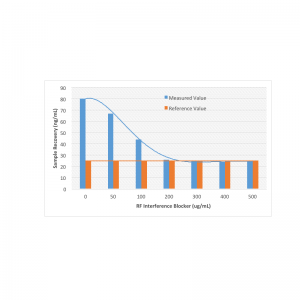
Rheumatoid Factor Interference Blocker
-
- Sale!
- Antibodies, Interference
Rheumatoid Factor Interference Blocker
- Original price was: $595.00.$395.00Current price is: $395.00.

New Antibodies from MOLECULAR DEPOT
-
- Sale!
- Antibodies
SUMO1 Antibody (C-Term)
- Original price was: $1,295.00.$695.00Current price is: $695.00.
-
- Sale!
- Antibodies
IL18RAP Antibody (N-Term)
- Original price was: $1,295.00.$695.00Current price is: $695.00.
-
- Sale!
- Antibodies
DENR Antibody
- Original price was: $1,295.00.$695.00Current price is: $695.00.
-
- Sale!
- Antibodies
Mouse DHFR Antibody (C-Term)
- Original price was: $1,295.00.$695.00Current price is: $695.00.
-
- Sale!
- Antibodies
BCL6B Antibody (Center)
- Original price was: $1,295.00.$695.00Current price is: $695.00.
-
- Sale!
- Antibodies
RSK4 Antibody (N-Term)
- Original price was: $1,295.00.$695.00Current price is: $695.00.
-
- Sale!
- Antibodies
IRF3 Antibody
- Original price was: $1,295.00.$695.00Current price is: $695.00.
-
- Sale!
- Antibodies
DAAM1-T361 Antibody (N-Term)
- Original price was: $1,295.00.$695.00Current price is: $695.00.
-
- Sale!
- Antibodies
RHEX Antibody (C-Term)
- Original price was: $1,295.00.$695.00Current price is: $695.00.
-
- Sale!
- Antibodies
Myoglobin Antibody
- Original price was: $1,295.00.$695.00Current price is: $695.00.
New Proteins from MOLECULAR DEPOT
-
- Sale!
- Conjugates, Proteins
Captopril HSA Biotin Conjugate
- Original price was: $1,995.00.$995.00Current price is: $995.00.
-
- Sale!
- Proteins
PKC-α, Active, GST-tagged from Xanopus sp.
- Original price was: $1,595.00.$795.00Current price is: $795.00.
-
- Sale!
- Conjugates, Proteins
Prilocain BSA Biotin Conjugate
- Original price was: $1,995.00.$995.00Current price is: $995.00.
-
- Sale!
- Conjugates, Proteins
T3 (Triiodothyronine) BSA Biotin Conjugate
- Original price was: $1,995.00.$995.00Current price is: $995.00.
-
- Sale!
- Conjugates, Proteins
Pipemidic Acid BSA Biotin Conjugate
- Original price was: $1,995.00.$995.00Current price is: $995.00.
-
- Sale!
- Proteins
PKD2 Protein, Active (Recombinant Human)
- Original price was: $1,795.00.$895.00Current price is: $895.00.
-
- Sale!
- Conjugates, Proteins
Meropenem BSA Biotin Conjugate
- Original price was: $1,995.00.$995.00Current price is: $995.00.
-
- Sale!
- Conjugates, Proteins
Piperacillin BSA Biotin Conjugate
- Original price was: $1,995.00.$995.00Current price is: $995.00.
-
- Sale!
- Proteins
Protein A Peroxidase from Staphylococcus aureus/horseradish
- Original price was: $1,195.00.$595.00Current price is: $595.00.
-
- Sale!
- Conjugates, Proteins
Tobramycin BSA Biotin Conjugate
- Original price was: $1,995.00.$995.00Current price is: $995.00.

New Chemicals from MOLECULAR DEPOT
-
- Sale!
- Chemicals, Interference, Lipids
Triglyceride Mix for Interference Testing
- Original price was: $895.00.$395.00Current price is: $395.00.
-
- Sale!
- Chemicals
Microparticle Stabilizer Solution
- Price range: $295.00 through $495.00
-
- Sale!
- Buffers & Solutions, Chemicals
Enzyme Acceptor Stabilization Buffer
- Original price was: $495.00.$250.00Current price is: $250.00.
-
- Sale!
- Buffers & Solutions, Chemicals
Enzyme Donor Stabilization Buffer
- Original price was: $495.00.$250.00Current price is: $250.00.
-
- Sale!
- Chemicals, Conjugates
Progesterone Biotin Conjugate Solution
- Original price was: $995.00.$595.00Current price is: $595.00.
-
- Sale!
- Buffers & Solutions, Chemicals
Microparticle Activation Buffer
- Price range: $395.00 through $695.00
-
- Sale!
- Buffers & Solutions, Chemicals
Microparticle Washing Buffer
- Price range: $395.00 through $695.00
-
- Sale!
- Buffers & Solutions, Chemicals
Microparticle Blocking Buffer
- Price range: $395.00 through $695.00
-
- Sale!
- Buffers & Solutions, Chemicals
Latex Microparticles Anti Aggregation Agent
- Price range: $295.00 through $3,500.00
-
- Sale!
- Chemicals
CPRG (Chlorophenol red-β-D-galactopyranoside)
- Original price was: $850.00.$395.00Current price is: $395.00.