Effectiveness and cost-effectiveness of Improving clinicians’ diagnostic and communication Skills on Antibiotic prescribing Appropriateness in pati…
Authors of this article are:
Ruiz R, Moragas A, Trapero-Bertran M, Sisó A, Berenguera A, Oliva G, Borràs-Santos A, García-Sangenís A, Puig-Junoy J, Cots JM0, Morros R, Mora T, Lanau-Roig A, Monfà R, Troncoso A, Abellana RM, Gálvez P, Medina-Perucha L, Bjerrum L, Amo I, Barragán N, Llor C.
A summary of the article is shown below:
BACKGROUND: Despite their marginal benefit, about 60% of acute lower respiratory tract infections (ALRTIs) are currently treated with antibiotics in Catalonia. This study aims to evaluate the effectiveness and efficiency of a continuous disease-focused intervention (C-reactive protein [CRP]) and an illness-focused intervention (enhancement of communication skills to optimise doctor-patient consultations) on antibiotic prescribing in patients with ALRTIs in Catalan primary care centres.METHODS/DESIGN: A cluster randomised, factorial, controlled trial aimed at including 20 primary care centres (N = 2940 patients) with patients older than 18 years of age presenting for a first consultation with an ALRTI will be included in the study. Primary care centres will be identified on the basis of socioeconomic data and antibiotic consumption. Centres will be randomly assigned according to hierarchical clustering to any of four trial arms: usual care, CRP testing, enhanced communication skills backed up with patient leaflets, or combined interventions. A cost-effectiveness and cost-utility analysis will be performed from the societal and national healthcare system perspectives, and the time horizon of the analysis will be 1 year. Two qualitative studies (pre- and post-clinical trial) aimed to identify the expectations and concerns of patients with ALRTIs and the barriers and facilitators of each intervention arm will be run. Family doctors and nurses assigned to the interventions will participate in a 2-h training workshop before the inception of the trial and will receive a monthly intervention-tailored training module during the year of the trial period. Primary outcomes will be antibiotic use within the first 6 weeks, duration of moderate to severe cough, and the quality-adjusted life-years. Secondary outcomes will be duration of illness and severity of cough measured using a symptom diary, healthcare re-consultations, hospital admissions, and complications. Healthcare costs will be considered and expressed in 2021 euros (year foreseen to finalise the study) of the current year of the analysis. Univariate and multivariate sensitivity analyses will be carried out.DISCUSSION: The ISAAC-CAT project will contribute to evaluate the effectiveness and efficiency of different strategies for more appropriate antibiotic prescribing that are currently out of the scope of the actual clinical guidelines.TRIAL REGISTRATION: ClinicalTrials.gov, NCT03931577.
Check out the article’s website on Pubmed for more information:
[link-preview url=https://www.ncbi.nlm.nih.gov/pubmed/31847912 forceshot=true]
This article is a good source of information and a good way to become familiar with topics such as: Acute cough; Anti-bacterial agents; Antimicrobial stewardship; Cost-effectiveness; Cost-utility; Effectiveness; Incremental cost-utility ratio; Prescribing; Primary healthcare; Qualitative research; Respiratory tract infections.
NativeFolder: The Only Bacterial Culture Medium for the Expression of Soluble Proteins
-
- Sale!
- Molecular Biology, Research Kits
NativeFolder Bacterial Culture Medium
- Original price was: $795.00.$295.00Current price is: $295.00.

Interference Test Kit for Assay Validation
-
- Sale!
- Interference, Research Kits
Interference Test Kit
- Original price was: $995.00.$495.00Current price is: $495.00.

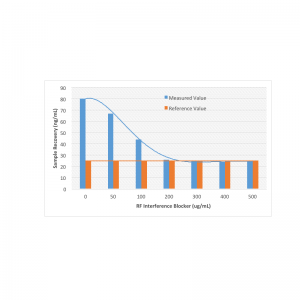
Rheumatoid Factor Interference Blocker
-
- Sale!
- Antibodies, Interference
Rheumatoid Factor Interference Blocker
- Original price was: $595.00.$395.00Current price is: $395.00.

New Antibodies from MOLECULAR DEPOT
-
- Sale!
- Antibodies
SUMO1 Antibody (C-Term)
- Original price was: $1,295.00.$695.00Current price is: $695.00.
-
- Sale!
- Antibodies
IL18RAP Antibody (N-Term)
- Original price was: $1,295.00.$695.00Current price is: $695.00.
-
- Sale!
- Antibodies
DENR Antibody
- Original price was: $1,295.00.$695.00Current price is: $695.00.
-
- Sale!
- Antibodies
Mouse DHFR Antibody (C-Term)
- Original price was: $1,295.00.$695.00Current price is: $695.00.
-
- Sale!
- Antibodies
BCL6B Antibody (Center)
- Original price was: $1,295.00.$695.00Current price is: $695.00.
-
- Sale!
- Antibodies
RSK4 Antibody (N-Term)
- Original price was: $1,295.00.$695.00Current price is: $695.00.
-
- Sale!
- Antibodies
IRF3 Antibody
- Original price was: $1,295.00.$695.00Current price is: $695.00.
-
- Sale!
- Antibodies
DAAM1-T361 Antibody (N-Term)
- Original price was: $1,295.00.$695.00Current price is: $695.00.
-
- Sale!
- Antibodies
RHEX Antibody (C-Term)
- Original price was: $1,295.00.$695.00Current price is: $695.00.
-
- Sale!
- Antibodies
Myoglobin Antibody
- Original price was: $1,295.00.$695.00Current price is: $695.00.
New Proteins from MOLECULAR DEPOT
-
- Sale!
- Conjugates, Proteins
Captopril HSA Biotin Conjugate
- Original price was: $1,995.00.$995.00Current price is: $995.00.
-
- Sale!
- Proteins
PKC-α, Active, GST-tagged from Xanopus sp.
- Original price was: $1,595.00.$795.00Current price is: $795.00.
-
- Sale!
- Conjugates, Proteins
Prilocain BSA Biotin Conjugate
- Original price was: $1,995.00.$995.00Current price is: $995.00.
-
- Sale!
- Conjugates, Proteins
T3 (Triiodothyronine) BSA Biotin Conjugate
- Original price was: $1,995.00.$995.00Current price is: $995.00.
-
- Sale!
- Conjugates, Proteins
Pipemidic Acid BSA Biotin Conjugate
- Original price was: $1,995.00.$995.00Current price is: $995.00.
-
- Sale!
- Proteins
PKD2 Protein, Active (Recombinant Human)
- Original price was: $1,795.00.$895.00Current price is: $895.00.
-
- Sale!
- Conjugates, Proteins
Meropenem BSA Biotin Conjugate
- Original price was: $1,995.00.$995.00Current price is: $995.00.
-
- Sale!
- Conjugates, Proteins
Piperacillin BSA Biotin Conjugate
- Original price was: $1,995.00.$995.00Current price is: $995.00.
-
- Sale!
- Proteins
Protein A Peroxidase from Staphylococcus aureus/horseradish
- Original price was: $1,195.00.$595.00Current price is: $595.00.
-
- Sale!
- Conjugates, Proteins
Tobramycin BSA Biotin Conjugate
- Original price was: $1,995.00.$995.00Current price is: $995.00.

New Chemicals from MOLECULAR DEPOT
-
- Sale!
- Chemicals, Interference, Lipids
Triglyceride Mix for Interference Testing
- Original price was: $895.00.$395.00Current price is: $395.00.
-
- Sale!
- Chemicals
Microparticle Stabilizer Solution
- Price range: $295.00 through $495.00
-
- Sale!
- Buffers & Solutions, Chemicals
Enzyme Acceptor Stabilization Buffer
- Original price was: $495.00.$250.00Current price is: $250.00.
-
- Sale!
- Buffers & Solutions, Chemicals
Enzyme Donor Stabilization Buffer
- Original price was: $495.00.$250.00Current price is: $250.00.
-
- Sale!
- Chemicals, Conjugates
Progesterone Biotin Conjugate Solution
- Original price was: $995.00.$595.00Current price is: $595.00.
-
- Sale!
- Buffers & Solutions, Chemicals
Microparticle Activation Buffer
- Price range: $395.00 through $695.00
-
- Sale!
- Buffers & Solutions, Chemicals
Microparticle Washing Buffer
- Price range: $395.00 through $695.00
-
- Sale!
- Buffers & Solutions, Chemicals
Microparticle Blocking Buffer
- Price range: $395.00 through $695.00
-
- Sale!
- Buffers & Solutions, Chemicals
Latex Microparticles Anti Aggregation Agent
- Price range: $295.00 through $3,500.00
-
- Sale!
- Chemicals
CPRG (Chlorophenol red-β-D-galactopyranoside)
- Original price was: $850.00.$395.00Current price is: $395.00.