
Application of radiomics for prediction of HPV status for patients with head and neck cancers.
Authors of this article are:
Bagher-Ebadian H, Lu M, Siddiqui F, Ghanem AI, Wen N, Wu Q, Liu C, Movsas B, Chetty IJ.
A summary of the article is shown below:
PURPOSE: To perform radiomics analysis of primary tumors extracted from pre-treatment contrast enhanced computed tomography (CE-CT) images for patients with oropharyngeal cancers to identify discriminant features and construct an optimal classifier for characterization and prediction of Human Papilloma Virus (HPV) status.METHODS AND MATERIALS: One-hundred-eighty-seven patients with oropharyngeal cancers with known HPV status (confirmed by immunohistochemistry-p16-protein testing) were retrospectively studied as follows: Group A: 95 patients (19HPV- and 76HPV+) from the MICAII-grand-challenge. Group B: 92 patients (52HPV- and 40HPV+) from our institution. Radiomics features (172) were extracted from pre-treatment diagnostic CE-CT images of the gross-tumor-volume (GTV). Levene and Kolmogorov-Smirnov’s tests with absolute-biserial-correlation (>0.48) were used to identify discriminant features between the HPV+ and HPV- groups. The discriminant features were used to train and test eight different classifiers. Area-Under-Receiver-Operating-Characteristic (AUC), Positive-Predictive and Negative-Predictive values (PPV and NPV, respectively) were used to evaluate the performance of the classifiers. Principal Component Analysis (PCA) was applied on the discriminant feature set and seven PCs were used to train and test a GLM classifier.RESULTS: Among 172 radiomics features only 12 radiomics features (from 3 categories) were significantly different (p<0.05, |BSC|>0.48) between the HPV+ and – groups. Among the 8 classifiers trained and applied for prediction of HPV status, the generalized-linear-model (GLM) showed the highest performance for each discriminant feature and the combined 12 features: AUC/PPV/NPV=0.878/0.834/0.811. The GLM high prediction power was AUC/PPV/NPV= 0.849/0.731/0.788 and AUC/PPV/NPV= 0.869/0.807/0.870 for unseen test datasets for groups A and B, respectively. After eliminating the correlation among discriminant features by applying PCA analysis, the performance of the GLM was improved by 3.3%, 2.2%, and 1.8% for AUC, PPV, and NPV, respectively.CONCLUSION: Results imply that GTV’s for HPV+ patients exhibit higher intensities, smaller lesion size, greater sphericity/roundness, and higher spatial intensity-variation/heterogeneity. Results are suggestive that radiomics features primarily associated with the spatial arrangement and morphological appearance of the tumor on contrast-enhanced diagnostic CT datasets, may be potentially used for classification of HPV status.© 2019 American Association of Physicists in Medicine.
Check out the article’s website on Pubmed for more information:
[link-preview url=https://www.ncbi.nlm.nih.gov/pubmed/31853980 forceshot=true]
This article is a good source of information and a good way to become familiar with topics such as: Human Papilloma Virus; Oropharyngeal Cancers; Radiomics Feature; Radiotherapy.
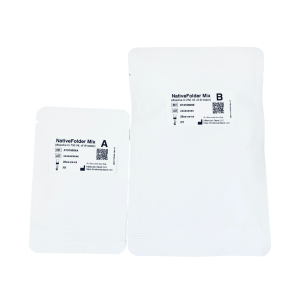
NativeFolder: The Only Bacterial Culture Medium for the Expression of Soluble Proteins
-
- Sale!
- Molecular Biology, Research Kits
NativeFolder Bacterial Culture Medium
- Original price was: $795.00.$295.00Current price is: $295.00.

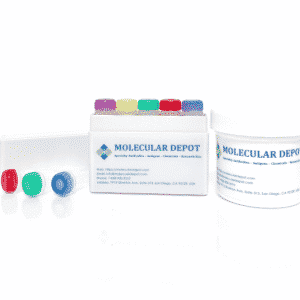
Interference Test Kit for Assay Validation
-
- Sale!
- Interference, Research Kits
Interference Test Kit
- Original price was: $995.00.$495.00Current price is: $495.00.

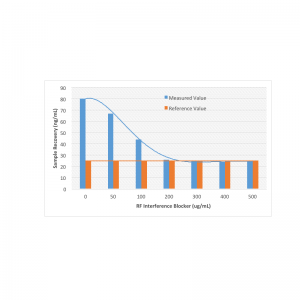
Rheumatoid Factor Interference Blocker
-
- Sale!
- Antibodies, Interference
Rheumatoid Factor Interference Blocker
- Original price was: $595.00.$395.00Current price is: $395.00.

New Antibodies from MOLECULAR DEPOT
-
- Sale!
- Antibodies
SUMO1 Antibody (C-Term)
- Original price was: $1,295.00.$695.00Current price is: $695.00.
-
- Sale!
- Antibodies
IL18RAP Antibody (N-Term)
- Original price was: $1,295.00.$695.00Current price is: $695.00.
-
- Sale!
- Antibodies
DENR Antibody
- Original price was: $1,295.00.$695.00Current price is: $695.00.
-
- Sale!
- Antibodies
Mouse DHFR Antibody (C-Term)
- Original price was: $1,295.00.$695.00Current price is: $695.00.
-
- Sale!
- Antibodies
BCL6B Antibody (Center)
- Original price was: $1,295.00.$695.00Current price is: $695.00.
-
- Sale!
- Antibodies
RSK4 Antibody (N-Term)
- Original price was: $1,295.00.$695.00Current price is: $695.00.
-
- Sale!
- Antibodies
IRF3 Antibody
- Original price was: $1,295.00.$695.00Current price is: $695.00.
-
- Sale!
- Antibodies
DAAM1-T361 Antibody (N-Term)
- Original price was: $1,295.00.$695.00Current price is: $695.00.
-
- Sale!
- Antibodies
RHEX Antibody (C-Term)
- Original price was: $1,295.00.$695.00Current price is: $695.00.
-
- Sale!
- Antibodies
Myoglobin Antibody
- Original price was: $1,295.00.$695.00Current price is: $695.00.
New Proteins from MOLECULAR DEPOT
-
- Sale!
- Conjugates, Proteins
Captopril HSA Biotin Conjugate
- Original price was: $1,995.00.$995.00Current price is: $995.00.
-
- Sale!
- Proteins
PKC-α, Active, GST-tagged from Xanopus sp.
- Original price was: $1,595.00.$795.00Current price is: $795.00.
-
- Sale!
- Conjugates, Proteins
Prilocain BSA Biotin Conjugate
- Original price was: $1,995.00.$995.00Current price is: $995.00.
-
- Sale!
- Conjugates, Proteins
T3 (Triiodothyronine) BSA Biotin Conjugate
- Original price was: $1,995.00.$995.00Current price is: $995.00.
-
- Sale!
- Conjugates, Proteins
Pipemidic Acid BSA Biotin Conjugate
- Original price was: $1,995.00.$995.00Current price is: $995.00.
-
- Sale!
- Proteins
PKD2 Protein, Active (Recombinant Human)
- Original price was: $1,795.00.$895.00Current price is: $895.00.
-
- Sale!
- Conjugates, Proteins
Meropenem BSA Biotin Conjugate
- Original price was: $1,995.00.$995.00Current price is: $995.00.
-
- Sale!
- Conjugates, Proteins
Piperacillin BSA Biotin Conjugate
- Original price was: $1,995.00.$995.00Current price is: $995.00.
-
- Sale!
- Proteins
Protein A Peroxidase from Staphylococcus aureus/horseradish
- Original price was: $1,195.00.$595.00Current price is: $595.00.
-
- Sale!
- Conjugates, Proteins
Tobramycin BSA Biotin Conjugate
- Original price was: $1,995.00.$995.00Current price is: $995.00.

New Chemicals from MOLECULAR DEPOT
-
- Sale!
- Chemicals, Interference, Lipids
Triglyceride Mix for Interference Testing
- Original price was: $895.00.$395.00Current price is: $395.00.
-
- Sale!
- Chemicals
Microparticle Stabilizer Solution
- Price range: $295.00 through $495.00
-
- Sale!
- Buffers & Solutions, Chemicals
Enzyme Acceptor Stabilization Buffer
- Original price was: $495.00.$250.00Current price is: $250.00.
-
- Sale!
- Buffers & Solutions, Chemicals
Enzyme Donor Stabilization Buffer
- Original price was: $495.00.$250.00Current price is: $250.00.
-
- Sale!
- Chemicals, Conjugates
Progesterone Biotin Conjugate Solution
- Original price was: $995.00.$595.00Current price is: $595.00.
-
- Sale!
- Buffers & Solutions, Chemicals
Microparticle Activation Buffer
- Price range: $395.00 through $695.00
-
- Sale!
- Buffers & Solutions, Chemicals
Microparticle Washing Buffer
- Price range: $395.00 through $695.00
-
- Sale!
- Buffers & Solutions, Chemicals
Microparticle Blocking Buffer
- Price range: $395.00 through $695.00
-
- Sale!
- Buffers & Solutions, Chemicals
Latex Microparticles Anti Aggregation Agent
- Price range: $295.00 through $3,500.00
-
- Sale!
- Chemicals
CPRG (Chlorophenol red-β-D-galactopyranoside)
- Original price was: $850.00.$395.00Current price is: $395.00.