
Lead-I ECG for detecting atrial fibrillation in patients attending primary care with an irregular pulse using single-time point testing: A systemat…
Authors of this article are:
Duarte R, Stainthorpe A, Mahon J, Greenhalgh J, Richardson M, Nevitt S, Kotas E, Boland A, Thom H, Marshall T, Hall M, Takwoingi Y.
A summary of the article is shown below:
BACKGROUND: Atrial fibrillation (AF) is the most common type of cardiac arrhythmia and is associated with increased risk of stroke and congestive heart failure. Lead-I electrocardiogram (ECG) devices are handheld instruments that can detect AF at a single-time point.PURPOSE: To assess the diagnostic test accuracy, clinical impact and cost effectiveness of single-time point lead-I ECG devices compared with manual pulse palpation (MPP) followed by a 12-lead ECG for the detection of AF in symptomatic primary care patients with an irregular pulse.METHODS: Electronic databases (MEDLINE, MEDLINE Epub Ahead of Print and MEDLINE In-Process, EMBASE, PubMed and Cochrane Databases of Systematic Reviews, Cochrane Central Database of Controlled Trials, Database of s of Reviews of Effects, Health Technology Assessment Database) were searched to March 2018. Two reviewers screened the search results, extracted data and assessed study quality. Summary estimates of diagnostic accuracy were calculated using bivariate models. Cost-effectiveness was evaluated using an economic model consisting of a decision tree and two cohort Markov models.RESULTS: Diagnostic accuracy The diagnostic accuracy (13 publications reporting on nine studies) and clinical impact (24 publications reporting on 19 studies) results are derived from an asymptomatic population (used as a proxy for people with signs or symptoms of AF). The summary sensitivity of lead-I ECG devices was 93.9% (95% confidence interval [CI]: 86.2% to 97.4%) and summary specificity was 96.5% (95% CI: 90.4% to 98.8%). Cost effectiveness The de novo economic model yielded incremental cost effectiveness ratios (ICERs) per quality adjusted life year (QALY) gained. The results of the pairwise analysis show that all lead-I ECG devices generate ICERs per QALY gained below the £20,000-£30,000 threshold. Kardia Mobile is the most cost effective option in a full incremental analysis. Lead-I ECG tests may identify more AF cases than the standard diagnostic pathway. This comes at a higher cost but with greater patient benefit in terms of mortality and quality of life.LIMITATIONS: No published data evaluating the diagnostic accuracy, clinical impact or cost effectiveness of lead-I ECG devices for the target population are available.CONCLUSIONS: The use of single-time point lead-I ECG devices in primary care for the detection of AF in people with signs or symptoms of AF and an irregular pulse appears to be a cost effective use of NHS resources compared with MPP followed by a 12-lead ECG, given the assumptions used in the base case model.REGISTRATION: The protocol for this review is registered on PROSPERO as CRD42018090375.
Check out the article’s website on Pubmed for more information:
[link-preview url=https://www.ncbi.nlm.nih.gov/pubmed/31869370 forceshot=true]
This article is a good source of information and a good way to become familiar with topics such as: .
NativeFolder: The Only Bacterial Culture Medium for the Expression of Soluble Proteins
-
- Sale!
- Molecular Biology, Research Kits
NativeFolder Bacterial Culture Medium
- Original price was: $795.00.$295.00Current price is: $295.00.

Interference Test Kit for Assay Validation
-
- Sale!
- Interference, Research Kits
Interference Test Kit
- Original price was: $995.00.$495.00Current price is: $495.00.

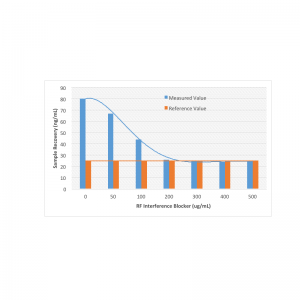
Rheumatoid Factor Interference Blocker
-
- Sale!
- Antibodies, Interference
Rheumatoid Factor Interference Blocker
- Original price was: $595.00.$395.00Current price is: $395.00.

New Antibodies from MOLECULAR DEPOT
-
- Sale!
- Antibodies
SUMO1 Antibody (C-Term)
- Original price was: $1,295.00.$695.00Current price is: $695.00.
-
- Sale!
- Antibodies
IL18RAP Antibody (N-Term)
- Original price was: $1,295.00.$695.00Current price is: $695.00.
-
- Sale!
- Antibodies
DENR Antibody
- Original price was: $1,295.00.$695.00Current price is: $695.00.
-
- Sale!
- Antibodies
Mouse DHFR Antibody (C-Term)
- Original price was: $1,295.00.$695.00Current price is: $695.00.
-
- Sale!
- Antibodies
BCL6B Antibody (Center)
- Original price was: $1,295.00.$695.00Current price is: $695.00.
-
- Sale!
- Antibodies
RSK4 Antibody (N-Term)
- Original price was: $1,295.00.$695.00Current price is: $695.00.
-
- Sale!
- Antibodies
IRF3 Antibody
- Original price was: $1,295.00.$695.00Current price is: $695.00.
-
- Sale!
- Antibodies
DAAM1-T361 Antibody (N-Term)
- Original price was: $1,295.00.$695.00Current price is: $695.00.
-
- Sale!
- Antibodies
RHEX Antibody (C-Term)
- Original price was: $1,295.00.$695.00Current price is: $695.00.
-
- Sale!
- Antibodies
Myoglobin Antibody
- Original price was: $1,295.00.$695.00Current price is: $695.00.
New Proteins from MOLECULAR DEPOT
-
- Sale!
- Conjugates, Proteins
Captopril HSA Biotin Conjugate
- Original price was: $1,995.00.$995.00Current price is: $995.00.
-
- Sale!
- Proteins
PKC-α, Active, GST-tagged from Xanopus sp.
- Original price was: $1,595.00.$795.00Current price is: $795.00.
-
- Sale!
- Conjugates, Proteins
Prilocain BSA Biotin Conjugate
- Original price was: $1,995.00.$995.00Current price is: $995.00.
-
- Sale!
- Conjugates, Proteins
T3 (Triiodothyronine) BSA Biotin Conjugate
- Original price was: $1,995.00.$995.00Current price is: $995.00.
-
- Sale!
- Conjugates, Proteins
Pipemidic Acid BSA Biotin Conjugate
- Original price was: $1,995.00.$995.00Current price is: $995.00.
-
- Sale!
- Proteins
PKD2 Protein, Active (Recombinant Human)
- Original price was: $1,795.00.$895.00Current price is: $895.00.
-
- Sale!
- Conjugates, Proteins
Meropenem BSA Biotin Conjugate
- Original price was: $1,995.00.$995.00Current price is: $995.00.
-
- Sale!
- Conjugates, Proteins
Piperacillin BSA Biotin Conjugate
- Original price was: $1,995.00.$995.00Current price is: $995.00.
-
- Sale!
- Proteins
Protein A Peroxidase from Staphylococcus aureus/horseradish
- Original price was: $1,195.00.$595.00Current price is: $595.00.
-
- Sale!
- Conjugates, Proteins
Tobramycin BSA Biotin Conjugate
- Original price was: $1,995.00.$995.00Current price is: $995.00.

New Chemicals from MOLECULAR DEPOT
-
- Sale!
- Chemicals, Interference, Lipids
Triglyceride Mix for Interference Testing
- Original price was: $895.00.$395.00Current price is: $395.00.
-
- Sale!
- Chemicals
Microparticle Stabilizer Solution
- Price range: $295.00 through $495.00
-
- Sale!
- Buffers & Solutions, Chemicals
Enzyme Acceptor Stabilization Buffer
- Original price was: $495.00.$250.00Current price is: $250.00.
-
- Sale!
- Buffers & Solutions, Chemicals
Enzyme Donor Stabilization Buffer
- Original price was: $495.00.$250.00Current price is: $250.00.
-
- Sale!
- Chemicals, Conjugates
Progesterone Biotin Conjugate Solution
- Original price was: $995.00.$595.00Current price is: $595.00.
-
- Sale!
- Buffers & Solutions, Chemicals
Microparticle Activation Buffer
- Price range: $395.00 through $695.00
-
- Sale!
- Buffers & Solutions, Chemicals
Microparticle Washing Buffer
- Price range: $395.00 through $695.00
-
- Sale!
- Buffers & Solutions, Chemicals
Microparticle Blocking Buffer
- Price range: $395.00 through $695.00
-
- Sale!
- Buffers & Solutions, Chemicals
Latex Microparticles Anti Aggregation Agent
- Price range: $295.00 through $3,500.00
-
- Sale!
- Chemicals
CPRG (Chlorophenol red-β-D-galactopyranoside)
- Original price was: $850.00.$395.00Current price is: $395.00.